HenSistemas Blog

Knowledge that builds precision.

Guides to choosing instruments and preparing data collection, based on applications in the catalog.

Follow via RSS · HenSistemas Notes

· 16 min read

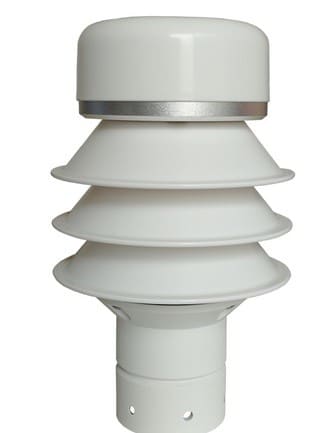
Ozone and NO₂ in research: how to measure gaseous pollutants with an air quality station, calibrate the electrochemical sensor and use the weather station

A teaching guide to measuring O₃, NO₂, CO and SO₂ with a compact air quality station: Brazil's Conama 506/2024 standards and averaging periods, ppb ↔ µg/m³ conversion with pressure and temperature (worked example), electrochemical sensor vs. reference method, NO₂ interference on ozone, photochemistry and total oxidant Ox, mixing layer and pollution rose, humidity artifacts, collocation against US EPA targets, siting, quality control and Brazilian studies.
· 13 min read

Urban heat island and microclimate research: how to build a network of mini temperature and humidity loggers and validate it with a weather station

A teaching guide to urban heat island and microclimate studies using dense networks of mini temperature and humidity loggers: surface vs atmospheric UHI, what the logger datasheet means for study design (high resolution, memory autonomy, ±5 %RH), solar radiation bias and multi-plate shields, site selection with Local Climate Zones and WMO urban guidance, before-and-after intercalibration, temperature and saturation-drift compensation of humidity with a worked example, validation and synoptic classification with the weather station, field workflow and studies from Curitiba, Cuiabá and Aracaju.

· 16 min read

Greenhouse microclimate in research: how to measure temperature, humidity and vapour pressure deficit (VPD) and compare it with the weather station

A teaching guide to measuring and documenting greenhouse and plastic-tunnel microclimate to research standards: why a weather station shield fails in still air (convection vs aspirated shield), how to read the sensor datasheet (0.4 °C; 4–6% RH; τ63% of 1 min), computing VPD with FAO-56 through worked examples (same dew point, three times the VPD; a sensor 2 °C too warm inflates VPD by 30%), installation at canopy height, gradient mapping for block designs, inside vs outside comparison with the weather station (transmittance, ΔT, ΔVPD), QC, maintenance and Brazilian studies from UFPel and ESALQ/USP.

· 16 min read

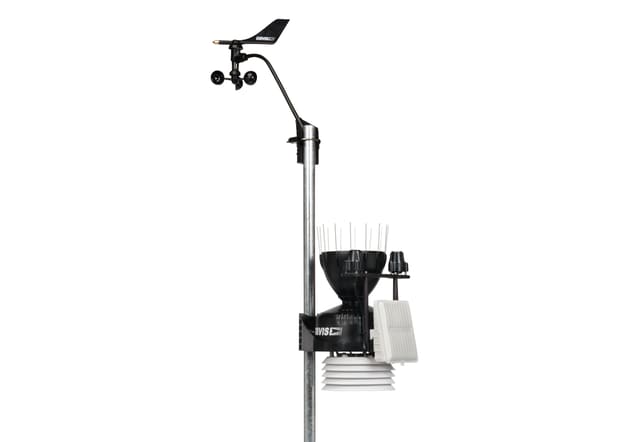
Integrated weather station on campus and at the experimental farm: installation, comparison with INMET and data quality control

A teaching guide to using an integrated automatic weather station (sensor suite + console) as a research data source: how to read the datasheet (+2 °C passive-shield error, photodiode radiation at ±5% of full scale, console ET that is not FAO-56), WMO siting (heights, site class, true north, barometer elevation), logging in UTC, intercomparison with Brazil's INMET network (MBE, RMSE, Willmott's d, Camargo & Sentelhas's c index, worked example converting wind to 2 m), Allen/FAO-56 integrity tests, maintenance and Brazilian studies from UNESP Jaboticabal.

· 11 min read

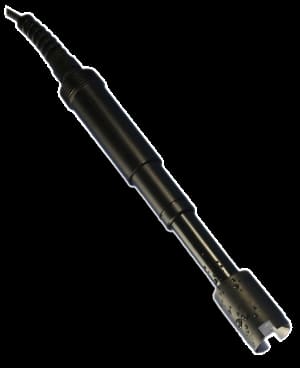
Dissolved oxygen in fish farming: growth, weight gain and aerator control

A guide for fish farming on the relationship between dissolved oxygen, appetite, growth and feed conversion. Understand overnight DO decline, Embrapa guidance and how an optical probe sends pond measurements to a controller over 4–20 mA or RS485 for aeration management.

· 11 min read

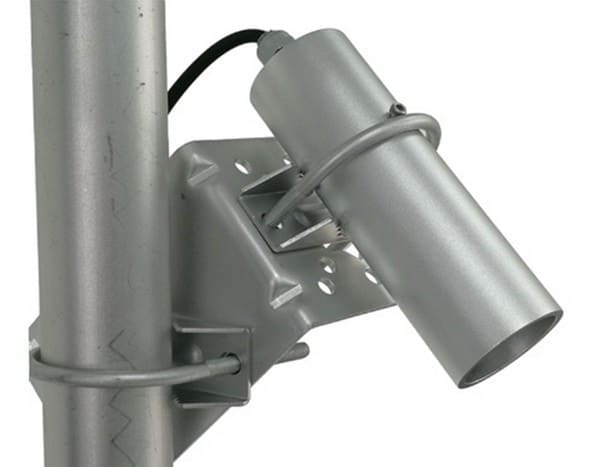
Doppler radar precipitation gauge at the weather station: intensity, precipitation type and maintenance-free sensing

A teaching guide to the Doppler radar precipitation gauge in research: 24 GHz principle (fall speed and drop size), rain/snow/hail classification, intensity without a funnel or moving parts, comparison with tipping bucket, weighing gauge and capacitive detector, key specs (±10%, 0.01–200 mm/h, RS485/ModBus), installation and QC with wind and temperature, energy budget without a heater, and Brazil use cases (urban hydrology, remote stations and network QC).

· 13 min read

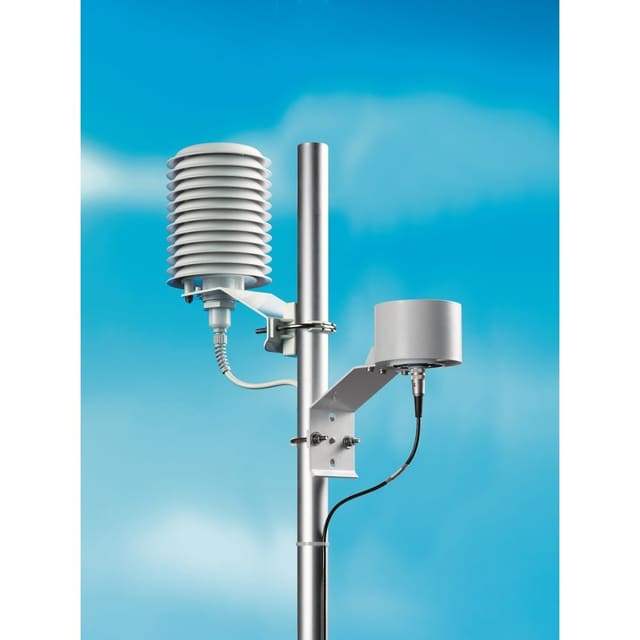
Capacitive precipitation detector at the weather station: rain onset and end, wet/dry sampling and event QC

A teaching guide to the capacitive precipitation detector in research: detecting rain versus measuring depth, capacitive principle with heater and anti-false-indication dome, ON/OFF (open collector), calibrated 0–1 V and 1.5–6 kHz frequency outputs, about a 2-minute end-of-event delay, mast installation, alumina-element maintenance, pairing with rain gauge, wind and data logger, and use in wet/dry samplers, irrigation and event quality control.

· 18 min read

Canopy temperature with an infrared sensor in research: water stress, the CWSI and pairing with the weather station

A teaching guide to infrared canopy thermometry in research: why leaves warm up under water deficit, how the infrared sensor measures, field of view and distance-to-target ratio, emissivity correction using sky temperature, computing the crop water stress index (CWSI) with empirical and theoretical methods, accuracy and cross-calibration, installation, quality control and pairing with air temperature, humidity, radiation and wind from the weather station.

· 22 min read

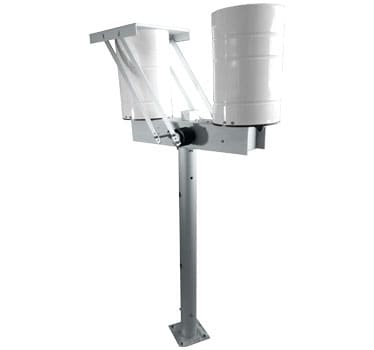
Wet and dry atmospheric deposition in research: how to sample with an automatic collector, preserve the sample and combine rain chemistry with the weather station

A teaching guide to atmospheric deposition in research: the difference between wet, dry and bulk deposition, what rain chemistry reveals in Brazil, volume-weighted means and deposition fluxes, how the automatic wet/dry sampler works, selection and siting criteria, sample collection and preservation, ion and conductivity balances, and combining the data with rainfall and wind from the weather station.

What do you need to measure?

Tell HenSistemas about your application.