HenSistemas Blog

Knowledge that builds precision.

Guides to choosing instruments and preparing data collection, based on applications in the catalog.

Follow via RSS · HenSistemas Notes

· 22 min read

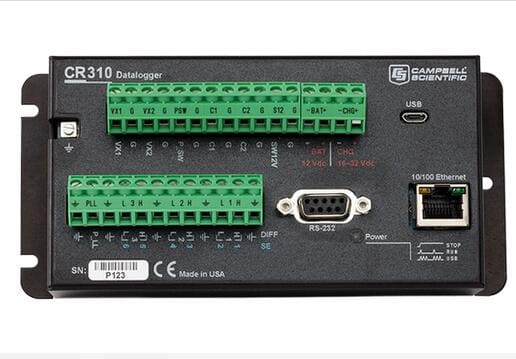
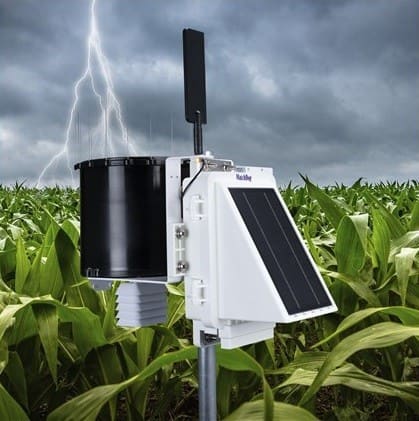
Programmable data logger at the weather station: how to wire sensors, configure inputs and program averages and totals to research standards

A didactic guide to using a programmable data logger at research stations: the measurement chain from sensor to file, single-ended and differential inputs, ratiometric measurement, the 60 Hz filter, 4–20 mA current, pulses and SDI-12, an uncertainty budget using logger accuracy, scans and data tables, derived quantities computed before averaging (vapour pressure, VPD, dew point), storage-format resolution, diagnostic variables, power, grounding, validation and WMO and Brazilian references.

· 22 min read

Stream and channel discharge in research: how to measure with an area-velocity Doppler sensor, calibrate velocity and relate the hydrograph to the weather station

A didactic guide to continuous discharge monitoring for research: why stage is not discharge (backwater, hysteresis, mobile bed), the area-velocity method and index velocity, how the Doppler sensor works with ultrasonic and pressure depth, critical reading of the datasheet (20 mm/s floor, 1.6 m/s default range, depth accuracy), section selection and geometry, calibration with current meter and ADCP, an illustrative runoff coefficient example, barometric compensation, hydrograph separation with conductivity and Brazilian references.

· 19 min read

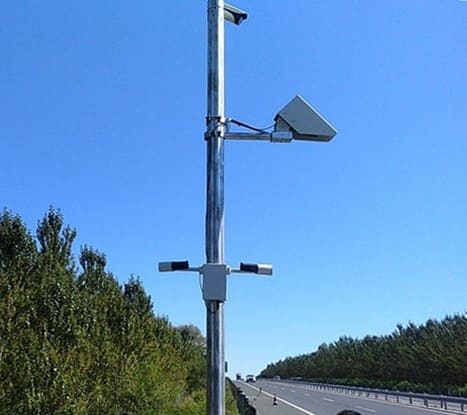
Road surface state at the road weather station: how to measure water film, ice and pavement temperature with a remote sensor and validate the data for research

A didactic guide to road meteorology for research: why rain in the gauge is not water on the road, road surface state classes, water film and hydroplaning models (University of São Paulo study), the multispectral remote sensor principle, the estimated grip index, critical reading of the datasheet (±1 mm accuracy), surface temperature for frost and Superpave PG, an illustrative drying example, installation, validation and Brazilian references.

· 18 min read

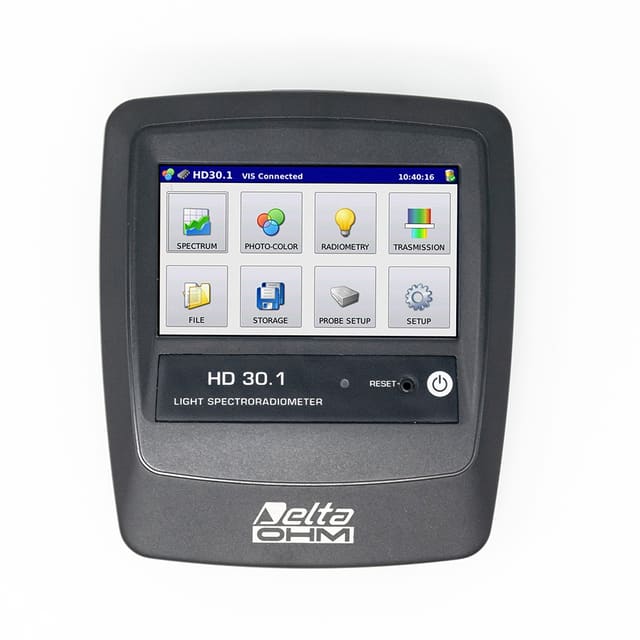
Spectral light quality in plant research: how to measure the spectrum with a spectroradiometer under LEDs, coloured shade nets and greenhouses and combine it with weather-station PAR

A didactic guide to measuring spectral light quality in plant research: quantity vs. quality, how a spectroradiometer works, PPFD, ePAR (400–750 nm), band fractions, R:FR ratio and PSS calculated from the spectrum, why lux cannot equalise treatments, Brazilian examples with coloured nets and in vitro LEDs, measurement campaigns, transmittance of nets and vessels, instrument limits and combination with continuous weather-station PAR.

· 17 min read

Leaf wetness at the weather station: how to measure leaf wetness duration, install the sensor and estimate it from relative humidity for disease warnings

A didactic guide to measuring leaf wetness at the weather station: what LWD is and why it is non-standard, the wetness requirement of Asian soybean rust, the resistance-grid sensor and its wet threshold, painting and heat treatment, the 30 cm / 30° reference position above turfgrass (Piracicaba studies), estimation from RH ≥ 90% with local calibration, an illustrative example, logging interval, quality control and Brazilian references.

· 16 min read

Atmospheric CO₂ at the weather station: how to measure outdoor carbon dioxide with an NDIR sensor, correct for pressure and humidity, and read the daily cycle

A didactic guide to measuring outdoor CO₂ with an NDIR sensor at the weather station: signal magnitudes (NOAA background, daily cycle, local sources), NDIR principle, pressure and temperature correction with a 1000 m example, dry-air conversion, the ABC auto-calibration trap, choosing range and output, concentration vs flux, reference-gas calibration and co-location, installation, quality control and Brazilian references.

What do you need to measure?

Tell HenSistemas about your application.