
Agriculture · Water · Technical guides
Dissolved oxygen in fish farming: growth, weight gain and aerator control
A guide for fish farming on the relationship between dissolved oxygen, appetite, growth and feed conversion. Understand overnight DO decline, Embrapa guidance and how an optical probe sends pond measurements to a controller over 4–20 mA or RS485 for aeration management.
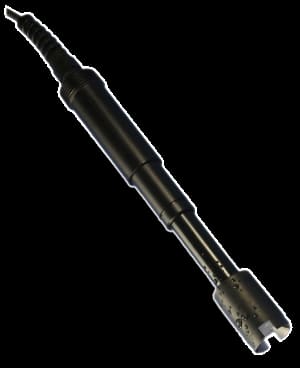
In fish farming, the amount of oxygen available in the water limits how well fish can breathe, feed and turn feed into growth. Keeping dissolved oxygen (DO) within an appropriate range is therefore as much a part of grow-out as supplying a suitable feed. The challenge is that this concentration changes throughout the day, increases with photosynthesis when light is available and can fall quickly overnight and just before dawn, precisely when nobody may be watching the pond.
An optical probe installed at the culture site measures the amount of oxygen actually dissolved in the water continuously. With this information, fish farmers no longer need to estimate risk only from the time of day or fish behaviour. They can start an aerator on the basis of a measured value and record whether aeration actually restored the DO level.
This guide is intended for fish farmers, aquaculture technicians and researchers. It explains the relationship between DO, appetite, feed conversion and survival and how to establish a management routine using the optical dissolved oxygen probe and a control system.
How oxygen contributes to growth and weight gain
Fish use oxygen for cellular respiration. The processes that sustain activity, digestion, tissue maintenance and the building of biomass depend on this aerobic metabolism. If the water provides little DO for a prolonged period, the fish cannot sustain the same performance merely because feed is available.
There are three practical consequences:
- Lower appetite and feed intake. In ponds where DO becomes very low or remains critical for long periods, fish reduce feeding and grow more slowly than expected. Embrapa Meio Ambiente highlights this relationship in its Technical Communication 54.
- Less efficient use of feed. Feed conversion relates the quantity of feed supplied to the gain in biomass. If fish eat less, or divert resources to cope with a stressful situation, a greater share of feed fails to become weight gain. Embrapa reports that mechanical aeration, by keeping DO higher, results in better feed conversion rates.
- Stress, disease and mortality. Stress reduces performance and can make fish more susceptible to diseases and parasites. In extreme oxygen shortages, deaths can occur, including mass mortalities associated with abrupt overnight declines.
Therefore, an aerator does not replace monitoring: it transfers oxygen and mixes the water, while the probe indicates when that assistance is needed and whether it is sufficient.
mg/L, saturation and the management range
DO concentration is normally presented in mg/L: the mass of oxygen dissolved per litre of water. For pond management, this is the value that feeds the alarm or the controller's setpoint.
The Embrapa manual for fish farming in excavated ponds gives adequate values above 4 mg/L, noting that lower values impair feeding, health and growth. This is a general reference, not a universal threshold: tolerance depends on species, life stage, temperature, production system and culture conditions. Obligate air-breathing fish, such as pirarucu, do not depend on DO in the water in the same way as species that rely entirely on aquatic respiration. Define the protocol with the technician responsible for the stock and do not treat 4 mg/L as a guarantee of safety or performance for every species.
A reading in % saturation answers a different question: how much oxygen the water contains relative to equilibrium with air under the current temperature, pressure and salinity. It helps with interpreting supersaturation and equilibrium conditions, but does not replace the concentration in mg/L for pond control. For the details of these corrections and the luminescence measuring principle, see our article on dissolved oxygen in research with an optical sensor.
Why the most critical time often falls outside a daily visit
During the day, phytoplankton produces oxygen through photosynthesis, with the rate depending on available light. At night, this production stops, while fish, the phytoplankton itself and other organisms continue consuming oxygen. Organic matter and bacteria in the water and sediment also contribute to oxygen demand.
The Embrapa manual identifies early morning as the period of lowest concentration and recommends measuring between 6 and 8 a.m., preferably before the first feeding, in family aquaculture using excavated ponds. Technical Communication 54 describes the period between midnight and 7 a.m. as particularly critical in intensive production.
A single early-morning reading provides a useful routine check but does not necessarily reveal when the decline started. A continuous record makes it possible to identify patterns such as:
- a more pronounced decline on nights following cloudy days, when there was less photosynthetic production;
- increased consumption as biomass builds during grow-out;
- a slower-than-expected response after the aerator is switched on;
- differences among ponds, stocking densities and feeding periods;
- minima that occur before or after the routine visit.
The goal is not simply to find the day's lowest value: it is to understand how quickly, for how long and at what time the deficit develops, so that the required amount and timing of aeration can be determined.
Turning the reading into an aerator command
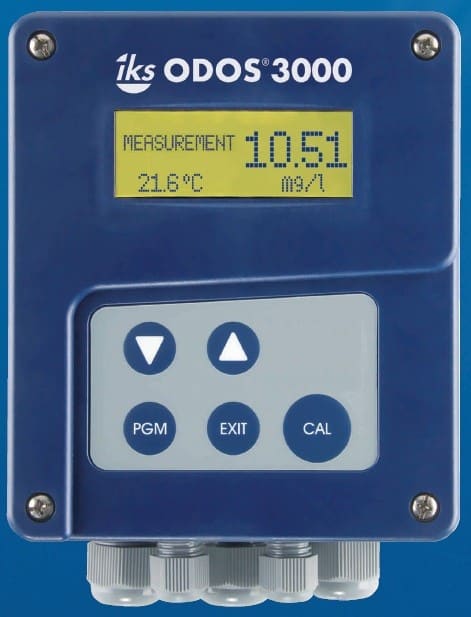
The optical dissolved oxygen sensor in the catalog provides two-wire 4–20 mA and RS485 Modbus RTU outputs. According to its datasheet, it connects directly to a PLC or a process control system. This lets the concentration measured in the pond be read by the same system that logs the data and controls an aeration stage.
A well-structured arrangement works as follows:
- The probe measures DO in the water and transmits the value over 4–20 mA or RS485 Modbus RTU.
- The controller/PLC compares the reading with the management criterion defined for the species and production system.
- A properly sized power stage starts the aerator when needed and stops it as oxygen recovers.
- The system stores DO, temperature, time, switching events and any alarms for refining management in the next production cycle.
For this role, the catalog also offers the dissolved oxygen and temperature measurement and control system. Its datasheet describes compatibility with the optical probe, two 230 V, 3 A relay outputs, a 4–20 mA analog output, DO indication in %, mg/L or ppm, temperature and IP67 protection. The outputs can form part of the aeration control; motor wiring must meet current, starting, electrical-protection and other equipment requirements and be designed by a qualified professional.
Two considerations make control more useful than simple time-based automation:
- Hysteresis and delay. The aerator should not repeatedly switch on and off with every small fluctuation near the setpoint. Define a band and/or a minimum run time appropriate to the system and validate the strategy in the pond.
- Fail-safe behaviour. If communication is lost, the reading is out of range, a cable is damaged or the cap reports a fault, the system must raise an alarm and follow the contingency plan, rather than assuming the water is well oxygenated.
The relay is only one link in the chain. The probe, control logic, switching devices, electrical protection, aerator sizing and field inspections must work together.
Where to install the probe in the pond
In a well-mixed system, one probe may represent the pond adequately. In a corner, near the bottom or in a poorly circulating zone, however, the value can differ from what fish experience elsewhere. The sampling point should respond to the management question, rather than simply being the easiest place to secure the cable.
In practice:
- place the sensor in the area that best represents where the fish are located, away from stagnant zones and without letting it rest against the sediment;
- keep and record a defined depth and position, so the series can be compared throughout the production cycle;
- in large or deep ponds, examine differences between surface, bottom and circulation zones before relying on a single control point;
- protect the cable and connections without obstructing the sensor cap's contact with the water;
- periodically compare the fixed point with manual measurements in the pond and keep an independent means of checking the water available.
A stable number on the controller is not enough: you must know where that number was measured and whether it remains representative after stocking density or circulation changes.
Maintenance: the sensor also needs clean conditions to measure well
Control logic is only reliable when the sensing element is working properly. Biofilm, sludge and fouling change the conditions around that element and can lead to delayed or misleading responses. The routine should include inspection and cleaning suited to the pond's fouling rate, cable inspection and checking against a reference according to the technical procedure adopted.
The probe has a replaceable cap, automatic cap-fault diagnostics and automatic temperature compensation. The datasheet states that the sensors are supplied precalibrated; this does not remove the checks required by the manufacturer or the culture site's protocol. It also does not specify automatic barometric-pressure or salinity compensation, which are important when interpreting % saturation in brackish or salt water.
The most useful history combines DO and temperature with dates of cleaning, cap replacement, calibration, feeding, aeration management, biomass sampling and mortality events. That is the dataset that lets water conditions be compared with the system's actual production performance.
What the optical probe delivers for fish farming
According to the product datasheet, the most relevant points for continuous monitoring are:
- optical measurement from 0–20 mg/L or 0–200% saturation;
- declared accuracy of ±1% at 25 °C, with a t90 response time below 60 seconds;
- automatic temperature compensation and an operating range of −5 to +50 °C;
- according to the datasheet, the submersible version can be used down to 50 m of water depth;
- no flow requirement at the sensing end, useful in still water;
- PVC construction and a diameter of 20 mm, or 30 mm in the submersible version;
- robust submersible version with bite protection, developed for fish farming and aquaculture;
- IP68 connector and fixed cables of different lengths as options;
- 4–20 mA and RS485 Modbus RTU outputs, plus interfaces for integration with existing systems;
- use in fresh and salt water and no oxidizable parts, according to the datasheet.
In practice, the operational advantage is not merely measuring a sample in the laboratory after conditions have changed: it is bringing the pond's actual concentration to the controller while oxygen is still falling, in time to take action.
Catalog alternatives and complements
- Dissolved oxygen and temperature measurement and control system: display, two relay outputs and a 4–20 mA output for the supervision and control stage.
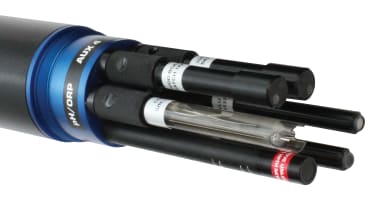
- Portable multiparameter probe: optical DO, conductivity, pH, ORP, salinity, temperature and depth in a portable instrument, useful for inspections, comparisons among ponds and profile checks.
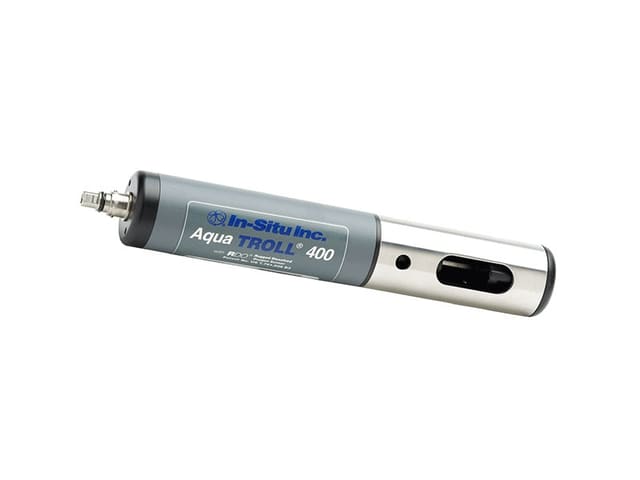
- Fixed multiparameter probe: adds pH, conductivity, temperature and level to DO, with Modbus/RS485 and SDI-12; appropriate when monitoring needs extend beyond aeration and include water-quality research.
- Multiparameter probe with an extended configuration: allows water-quality parameters and phytoplankton indicators to be combined, depending on the configuration given in the datasheet.
A concise protocol to start with
- Define, with qualified technical assistance, the DO range and intervention criteria appropriate to the species and production system.
- Check DO early in the morning before feeding, as recommended in the Embrapa manual for excavated ponds.
- Use the continuous record to identify the onset, minimum and duration of overnight declines.
- Periodically check sensor position, cap condition and alarms.
- Relate DO, aerator operation, supplied feed and biomass gain at each sampling event, instead of assessing each measurement in isolation.
- Test system failure: communication, alarms, electrical contingency and a manual means of operating aeration.
- Do not generalize an aeration scheme from one pond to another without checking biomass, circulation, temperature and the measured response.
The probe turns oxygen that was once noticed too late into a management variable. Growth and weight gain still depend on feed, genetics, health, stocking density, temperature and pond management; monitoring alone does not guarantee a production outcome. What it does provide is the ability to detect DO deficiency at the critical moment and trigger an intervention based on evidence.
References
- Lima, A. F. et al. Manual de piscicultura familiar em viveiros escavados (Manual on family fish farming in excavated ponds, in Portuguese). Brasília, DF: Embrapa, 2015, 143 p. Chapter on water quality (the daily DO cycle, the general reference above 4 mg/L, measurement between 6 and 8 a.m.) and the section on feed conversion.
- Queiroz, J. F. de; Boeira, R. C. Boas práticas de manejo para manter concentrações adequadas de oxigênio dissolvido em viveiros de piscicultura (Good practices for maintaining adequate dissolved oxygen in fish ponds, in Portuguese). Embrapa Meio Ambiente, Technical Communication 54, 2016, 9 p. Relationships among overnight declines, feeding, growth and mortality; mechanical aeration and feed conversion.
- Optical dissolved oxygen probe datasheet in the HenSistemas catalog Ranges, submersible aquaculture version, connections and measuring conditions.
- Dissolved oxygen and temperature measurement and control system datasheet in the HenSistemas catalog Relay outputs, display and integration with the probe.
- HenSistemas. Dissolved oxygen in research: measurement with an optical sensor Luminescence principle, concentration versus saturation, pressure, salinity and calibration.
Instruments for this application
iks-industrialODOS-5000
ODOS-5000 Optical Dissolved Oxygen Sensor (4-20mA and RS485)
AquareadAP-5000
AP-5000 Advanced Portable Multiparameter Aquaprobe
In-SituAquaTROLL-400
Aqua TROLL 400 Multiparameter Water Quality Instrument
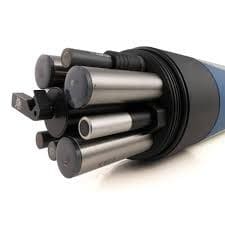
EUREKA water probesMANTA-PLUS
MANTA PLUS Multiparameter Probe with up to 12 Sensors
Keep reading
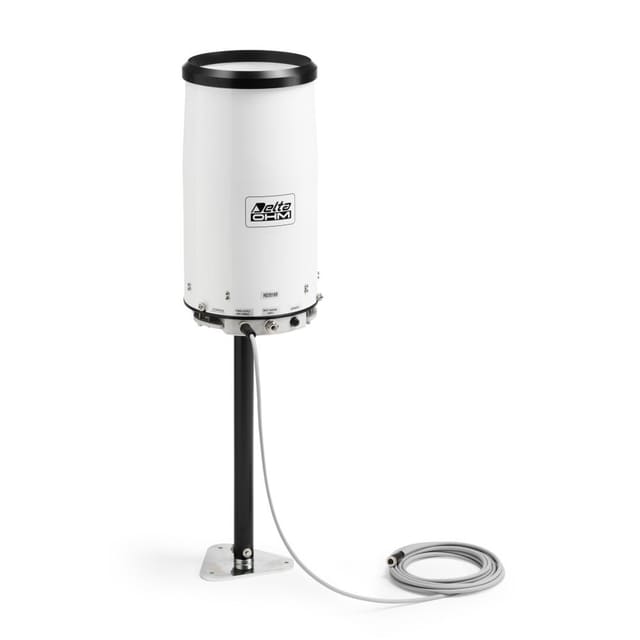
Weighing rain gauge in research: how to measure rainfall and intensity by weight, and when it outperforms the tipping bucket
A didactic guide to the weighing rain gauge: the load-cell principle, strengths and limits versus the tipping bucket, evaporation, wind and response time, output configuration, power, field verification and quality control for research in Brazil.
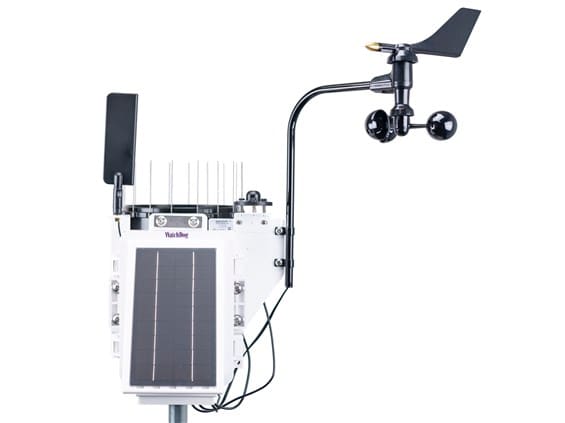
Reference evapotranspiration at the weather station: how to measure the inputs and compute ET₀ with FAO-56 for research
A teaching guide to reference evapotranspiration (ET₀) with the FAO-56 Penman-Monteith method: ET₀ vs ETc vs actual ET, the sensors a station needs, a step-by-step worked example, sensitivity to radiation, humidity and wind errors, site installation, hourly calculation, gap filling, Kc and quality control.
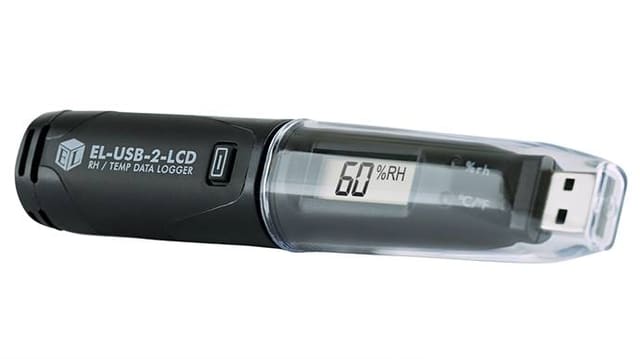
Animal environment in research: how to measure temperature, humidity and black globe in livestock buildings, calculate THI, BGHI and enthalpy and combine them with the weather station
A didactic guide to measuring the thermal environment in poultry houses, dairy barns and paddocks: why a thermometer alone is not enough, black globe temperature, air velocity, the THI, BGHI, radiant heat load and enthalpy indices (with local pressure), choosing a temperature and humidity logger and propagating its error, standard and alternative globes, installation, intercalibration, salt solutions, ammonia, quality control, a worked example, combining with the weather station and applications in Brazilian research.