
Meteorology · Agriculture · Technical guides
Pyranometers in weather stations: how to measure solar radiation to research standards
A teaching guide to pyranometers: what they measure, converting W/m² for FAO-56 evapotranspiration, reading ISO 9060:2018 classes A, B and C, installation, maintenance and selection criteria for agricultural, hydrological and environmental research in Brazil.
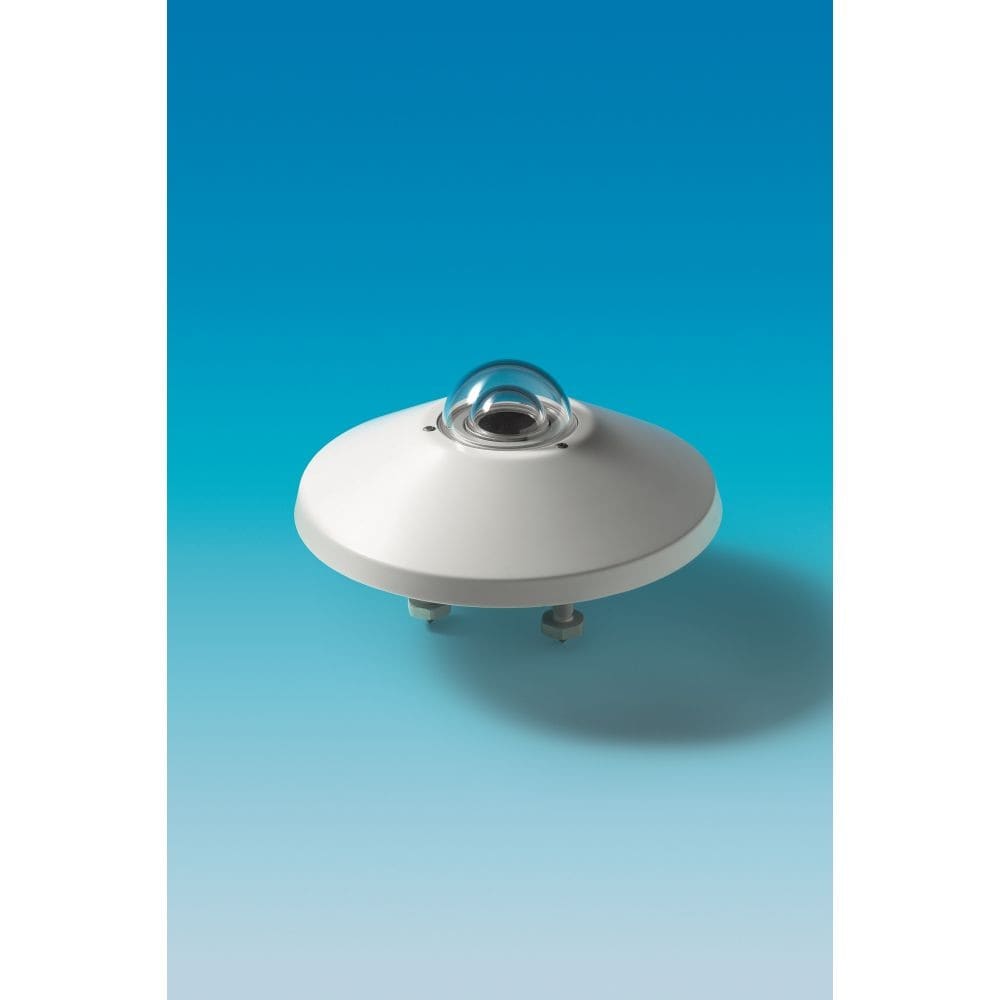
Of all the variables in a weather station, solar radiation is the one that feeds the most models: it goes into reference evapotranspiration, the energy balance of crops and forests, plant growth modelling and photovoltaic potential assessments. Even so, it is often treated as just another sensor on the mast. The consequences show up later, during analysis: odd spikes at sunrise, negative values at night, trends that are really dirt building up on the dome rather than climate change.
This guide explains, step by step, what a pyranometer measures, how to read the ISO 9060:2018 classification, how to install and maintain the sensor according to the manufacturer and the World Meteorological Organization (WMO), and which criteria to use when choosing the right instrument for your research.
What a pyranometer measures
A pyranometer measures global solar irradiance on a flat surface, in watts per square metre (W/m²). "Global" means the sum of two components: direct radiation, coming from the solar disc, and diffuse radiation, scattered by the atmosphere and clouds and arriving from the whole sky. That is why the sensor "sees" the entire hemisphere above it (a 2π sr field of view).
Research-grade models use a thermopile: a set of thermocouples beneath a black surface that absorbs shortwave radiation (roughly 0.3 to 3 µm). The temperature difference between the heated surface and the sensor body produces a very small voltage, in the microvolt range. Each instrument leaves the factory with its own sensitivity (for example, between 6 and 12 µV per W/m²), stated on its calibration certificate. The maths is simple: irradiance = measured voltage ÷ sensitivity.
Two variations matter when planning experiments:
- With a shadow ring or shade disc blocking the sun, the same type of sensor measures diffuse radiation only.
- With two pyranometers, one facing up and one facing down (an albedometer), you measure the radiation reflected by the surface and calculate albedo, which is useful in land-use, pasture, crop and urban studies.
From irradiance to evapotranspiration: the units that cause confusion
A pyranometer reports instantaneous power (W/m²). Agronomic models, however, use accumulated energy. In the FAO-56 (Penman-Monteith) method, solar radiation is entered in MJ/m² per day. Two conversions cover almost every case:
- Daily mean in W/m² × 0.0864 = MJ/m²·day. A daily mean of 200 W/m² equals 17.3 MJ/m²·day.
- 1 W/m² sustained for one hour = 3.6 kJ/m². Brazil's national weather service (INMET), for example, publishes hourly global radiation from its automatic stations in kJ/m²; dividing that value by 3.6 gives the hour's mean irradiance in W/m².
When radiation is not measured, FAO-56 allows it to be estimated from the daily temperature range (the Hargreaves method). It is a fallback: in humid, cloudy regions, common across much of Brazil, the estimation error can be large. If evapotranspiration is central to your study, measuring radiation directly is usually the best-value investment in the station.
How to read the ISO 9060:2018 classification
ISO 9060 classifies pyranometers by performance. In the 2018 edition the classes became A, B and C, replacing the old names "secondary standard", "first class" and "second class". The standard also introduced two additional qualifiers: "spectrally flat" (an almost uniform response across the solar spectrum) and "fast response".
In practice, the class summarises a set of errors the manufacturer must demonstrate. The main ones are worth understanding, because they explain what you will see in your data:
- Zero offset. At night the dome loses heat to the sky through infrared radiation, and the sensor may record slightly negative values. That is physics, not a fault. Do not blindly "zero" these values in post-processing; document and handle them.
- Directional (cosine) response. With the sun low, near sunrise and sunset, the relative error grows. That is where the odd spikes in series from low-quality sensors appear.
- Temperature dependence and non-linearity. These matter in regions with large daily temperature ranges, such as Brazil's Cerrado and semi-arid Northeast.
- Long-term stability. This tells you how much the sensitivity drifts in a year and sets the recalibration interval.
- Response time. Relevant for passing clouds and photovoltaic monitoring; less critical for daily totals.
A practical rule for research: class A for reference stations, long-term networks and energy-balance studies; class B for most agricultural, hydrological and environmental research stations; class C for general monitoring and teaching when the budget is tight.
What about silicon pyranometers?
Silicon photodiode sensors are cheaper and very fast, but they respond to only part of the solar spectrum and are calibrated for clear skies. Under clouds, beneath a canopy or under an altered spectrum, the error increases, and they generally do not qualify as "spectrally flat". They are useful for irrigation management, teaching and dense low-cost networks; for publications in which radiation is a key variable, choose a thermopile.
Installation: the details that matter most
The manufacturer's and the WMO's recommendations converge on a few points:
- A clear horizon. No building, tree or structure should rise above the plane of the sensor. If that is impossible, obstacles along the sun's path from sunrise to sunset should not exceed 5° of elevation.
- No shadow or reflection from the mast itself. The top of the mast should not sit above the plane of the pyranometer, and the sensor should be kept away from surfaces that reflect sunlight onto it. On stations with a solar panel, watch the panel's position.
- Perfect levelling. Use the built-in bubble level and the adjustable feet. A tilted sensor measures irradiance on another plane, not on the horizontal.
- Connector towards the pole. Under ISO TR 9901 and WMO guidance, the connector should point towards the pole of the station's hemisphere: in Brazil, almost entirely in the Southern Hemisphere, that means south.
- Thermal insulation from the bracket. Leave an air gap between the base and the mounting plate by using the instrument's feet, while keeping a good electrical ground.
- Easy access. The dome needs frequent cleaning; a sensor that is hard to reach is a dirty sensor.
Maintenance: where data quality is lost
- Clean the dome with water and lens tissue; if needed, pure ethyl alcohol followed by another rinse with water only. In farm areas with dust, pollen or sea spray, cleaning must be frequent; the WMO recommends frequent inspections, preferably daily at operational stations.
- Check the desiccant (silica gel). Condensation inside the dome means it is saturated.
- Check the level on every visit and log it in your field notebook.
- Recalibrate periodically. The manufacturer recommends checking calibration every year; in long-term networks, keep the history of sensitivities so the series can be corrected.
- Compare with a reference. Comparing your series with a nearby station, or with the clear-sky radiation calculated for the site, helps detect soiling and drift.
As with any research variable, keep the raw data (unfiltered voltage or irradiance) and record cleaning and calibration dates.
An example from the catalogue
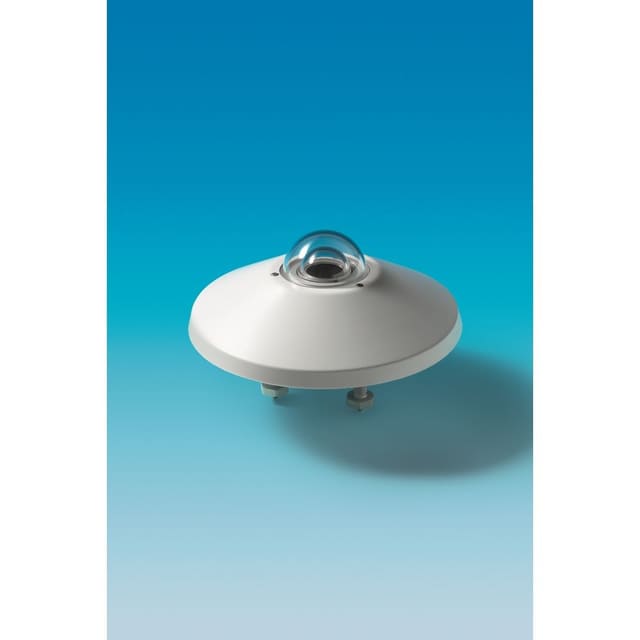
In the HenSistemas catalogue, the Delta OHM spectrally flat class B pyranometer (LPPYRA02 series) illustrates these criteria well. According to the manufacturer's datasheet, it uses a thermopile, has a typical sensitivity of 6 to 12 µV/(W/m²), a spectral range of 283 to 2,800 nm and measures up to 2,000 W/m² (or 4,000 W/m² in specific versions). Stated limits include a response time (95%) under 10 s, total zero offset below ±15 W/m², annual instability below ±1%, non-linearity below ±1% and directional response below ±18 W/m². It is rated IP67 and operates from -40 to 80 °C.
The series comes in a passive version (microvolt output) and in versions with 4–20 mA, 0–1/5/10 V, RS485 Modbus-RTU or SDI-12 output, which makes it easy to integrate with different loggers. The sensor ships with a shade disc, a silica-gel cartridge, a levelling device and a calibration report. The manufacturer, now part of Senseca, states that the line has been succeeded by the PYRAsense LPS02 series in the same class; when you request a quote, the HenSistemas team will confirm which version is available.
Related products
- EKO class A pyranometer: for reference stations and energy-balance studies; the manufacturer recommends recalibration every 5 years.
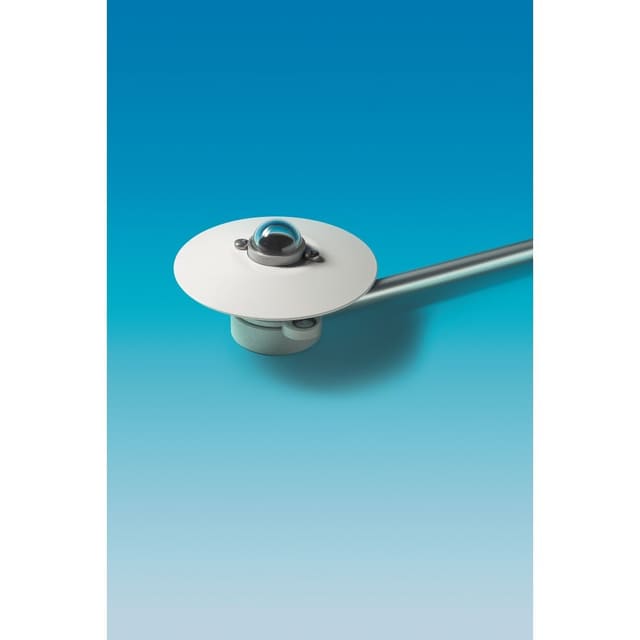
- Delta OHM second class (class C) pyranometer: a lower-cost option for general monitoring and teaching.
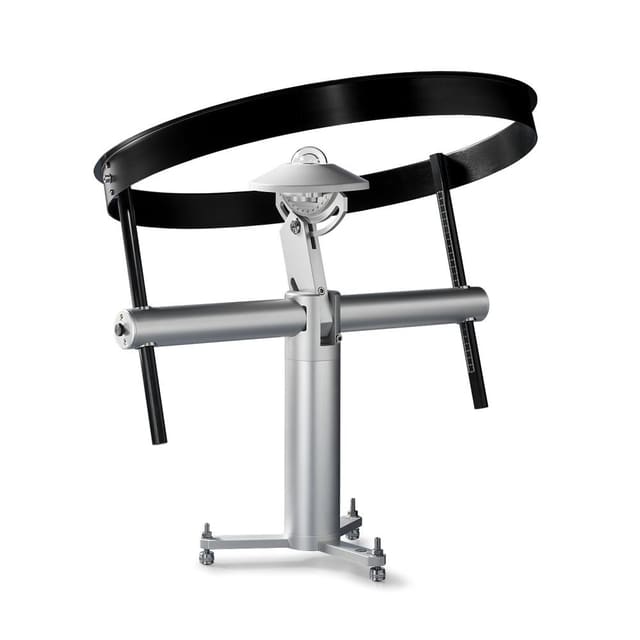
- Class B pyranometer with shadow ring: measures diffuse radiation, separating it from direct radiation.
- LightScout silicon pyranometer: an economical alternative for irrigation management and dense networks.
- Weather station data logger with 4G transmission: offers 0–50 mV analogue inputs suited to passive pyranometers, plus SDI-12 and RS485 ports.
For the bigger picture, see also our guides How to choose a weather station and Data logger: how to choose the right one.
Checklist before requesting a quote
- Is radiation a primary variable in the study (energy balance, evapotranspiration) or just supporting data? That decides the class.
- Do you need global radiation only, or also diffuse radiation and albedo?
- Can your logger read microvolts with good resolution, or is a sensor with 4–20 mA, Modbus or SDI-12 output a better fit?
- Does the site have a clear horizon and allow mounting without shade from the mast?
- Who will clean the dome, how often, and how will it be logged?
- What will the recalibration interval be, and who will keep the sensitivity history?
Answering these questions before budgeting avoids the most common frustration in field research: finding out, months later, that the radiation series cannot support the planned analysis. If you would like help matching your research protocol to the catalogue, talk to the HenSistemas team.
Instruments for this application
DeltaOhm - GHM GroupLPPYRA02
LPPYRA02 Series Spectrally Flat Class B (First Class) Pyranometer

DeltaOhm - GHM GroupLPPYRA03
LP PYRA 03 Second Class Pyranometers to ISO 9060
DeltaOhm - GHM GroupLPPYRA12
LPPYRA12 Series – Spectrally Flat Class B Pyranometers with Shadow Ring
Spectrum Technologies3670I
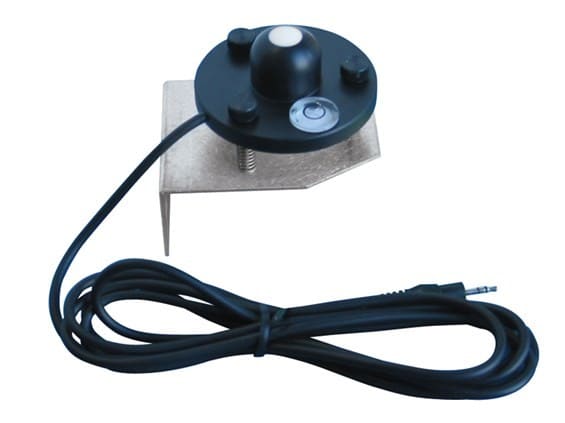
LightScout Silicon Pyranometer
DeltaOhm - GHM GroupHD33MT.4
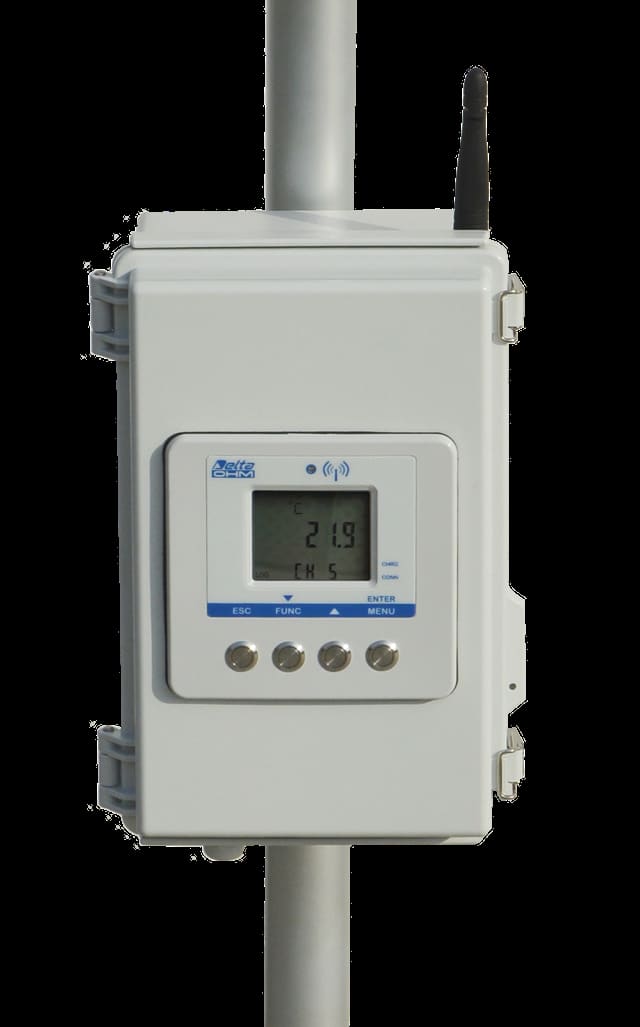
HD33MT.4 Data Logger for Weather Station
Keep reading
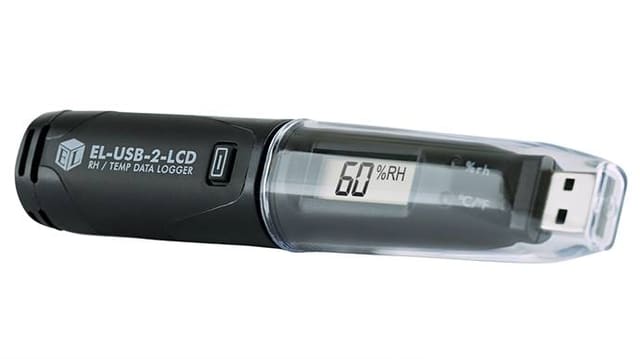
Animal environment in research: how to measure temperature, humidity and black globe in livestock buildings, calculate THI, BGHI and enthalpy and combine them with the weather station
A didactic guide to measuring the thermal environment in poultry houses, dairy barns and paddocks: why a thermometer alone is not enough, black globe temperature, air velocity, the THI, BGHI, radiant heat load and enthalpy indices (with local pressure), choosing a temperature and humidity logger and propagating its error, standard and alternative globes, installation, intercalibration, salt solutions, ammonia, quality control, a worked example, combining with the weather station and applications in Brazilian research.
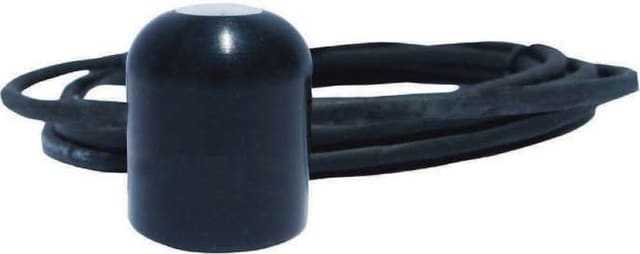
Silicon-cell pyranometer at the weather station: when it is enough, where the errors come from and how to calibrate it against a thermopile
A didactic guide to silicon photodiode pyranometers at research stations: how they work, why calibration holds for clear skies, spectral error under clouds and in reflected light, cosine response, temperature, dirt on the acrylic diffuser and drift, what ISO 9060:2018 says (Class C, not spectrally flat), when the sensor is enough, field cross-calibration against a thermopile with a clear-sky filter and worked example, the FAO-56 Rso envelope, integration to MJ/m²·day, effect on ET₀, dense low-cost networks and Brazilian references.
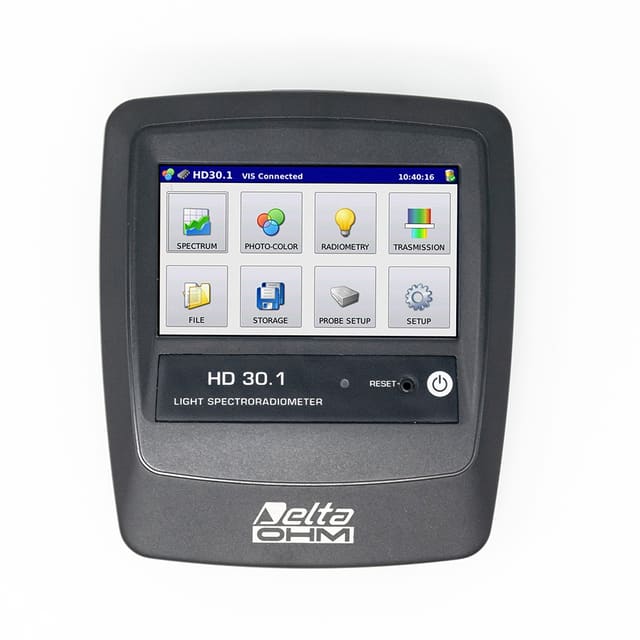
Spectral light quality in plant research: how to measure the spectrum with a spectroradiometer under LEDs, coloured shade nets and greenhouses and combine it with weather-station PAR
A didactic guide to measuring spectral light quality in plant research: quantity vs. quality, how a spectroradiometer works, PPFD, ePAR (400–750 nm), band fractions, R:FR ratio and PSS calculated from the spectrum, why lux cannot equalise treatments, Brazilian examples with coloured nets and in vitro LEDs, measurement campaigns, transmittance of nets and vessels, instrument limits and combination with continuous weather-station PAR.