
Meteorology · Technical guides
How to choose a weather station
What to consider when choosing a weather station: the variables you need to measure, the installation site, the power supply and how to access the data.
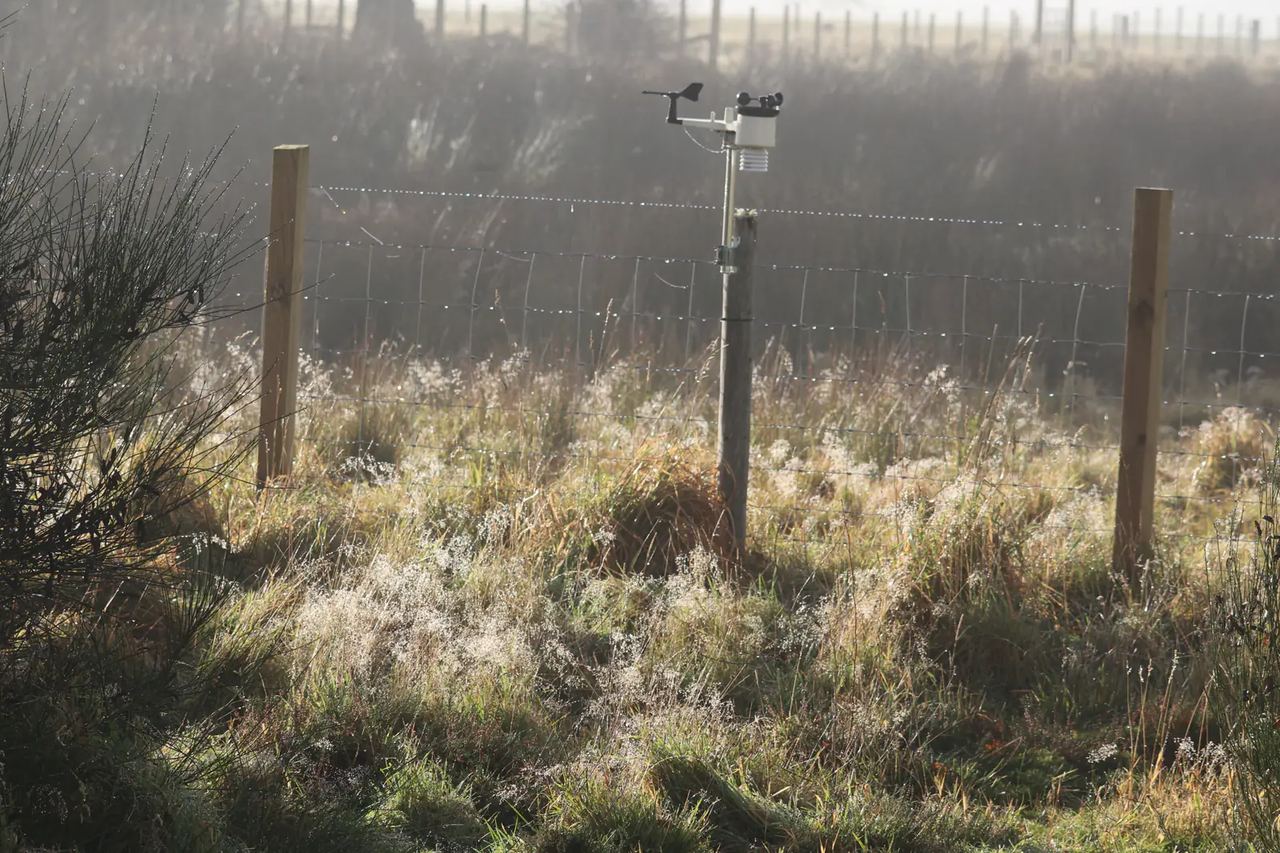
Choosing a weather station is easier when the decision starts from how the data will be used, not from the equipment. A station for irrigation, one for research and one for tracking a construction site measure similar variables, but they call for different levels of accuracy, communication and care at installation. This guide walks through the criteria in that order and ends with examples of models from the HenSistemas catalog.
Start with the decision the data will support
Before comparing datasheets, answer three questions:
- What will the data be used for? Irrigation management, research, tracking an operation and local forecasting each call for a different level of detail.
- Who will use it? An operator who checks the value on the spot needs a display at the site. A team that analyzes historical series needs the data recorded and exportable.
- Where will the station be? Whether there is electrical power, cell signal and frequent access to the site changes the whole choice.
Writing the answers down in a paragraph already rules out a good share of the models.
Variables: the basics and what depends on the application
Almost every station measures air temperature, relative humidity, barometric pressure, wind speed and direction, and rain. Beyond that, what matters is what your work requires:
- Solar radiation, for solar energy, agriculture and evapotranspiration calculations.
- UV radiation, for exposure studies.
- Evapotranspiration, which some stations calculate from the other variables and which helps plan irrigation.
- Extra inputs for soil moisture, leaf wetness or water level sensors. Check how many free inputs the station has: you can only add a sensor later if there is somewhere to connect it.
List the variables you need today and those you may need in the future. Planning for a free input now usually saves you from replacing the station later.
Sensor technology: with or without moving parts
Wind can be measured with a cup anemometer and a wind vane, which have moving parts, or with an ultrasonic sensor, which has none. Rain can be measured with a tipping-bucket rain gauge or, in some models, with radar.
Sensors with moving parts are well established and easy to check in the field. A tipping-bucket rain gauge, for example, can be checked by pouring in a known volume of water. On the other hand, they are subject to wear, insects and ice. Ultrasonic sensors tend to need less mechanical maintenance, which helps when access to the site is difficult, but they still need cleaning and periodic checks.
Accuracy: read the datasheet methodically
- Range, accuracy and resolution are different things. Resolution is the smallest step the output shows. Accuracy tells you how far a reading can be from the true value. A station can display decimal places and still have lower accuracy.
- Compare variable by variable, not the “accuracy of the station.” Wind, temperature and rain often have very different specifications.
- The shield matters. Direct sunlight heats the temperature and humidity sensor and distorts the reading. That is why these sensors sit inside a radiation shield.
- Traceability. If the data will go into reports, audits or research, ask the supplier about calibration and certificates before you buy.
Communication: how the data leaves the station
- On site: a console or display shows the readings and the daily highs and lows. It works when someone visits the station.
- Download on site: a data logger stores the readings and you download them over USB or another direct connection.
- Remote: cellular (4G, 3G, GSM), satellite, Wi-Fi or Ethernet. Over large areas with many points, long-range, low-power networks such as LoRa can make sense: confirm with the supplier whether the model supports them.
- Integration interfaces: SDI-12, RS485 with the Modbus protocol, or analog outputs. The question is whether the station has to talk to a data logger, a PLC or software you already use.
Also ask where the data goes: an FTP server, the manufacturer’s cloud or your own system. And if communication is over a cellular network, confirm coverage at the site before installing.
Power: the station has to run on its own
- A solar panel with a battery makes the station independent of the power grid. Check that the battery covers periods without sun.
- Batteries are enough for low-power stations and data loggers, with a runtime of months stated by the manufacturer.
- External DC power requires a supply at the site, and consumption matters. Sensor heating, used to operate in the cold, increases consumption.
Installation: the site matters as much as the sensor
- Pick an open spot that represents the area you want to describe, away from buildings, trees, walls and roofs that block the wind and rain or warm the air.
- Mount the wind sensors at the highest, clearest point you can, on a firm mast, and align the direction sensor to north as the manufacturer indicates.
- The rain gauge should be level, with its opening unobstructed and nothing overhead.
- The solar radiation sensor should be level and out of shade during the day.
- Record the coordinates, height and orientation of each sensor. Whoever interprets the data a year from now will need that information.
Calibration and maintenance
Sensors drift over time, and humidity and solar radiation sensors, in general, are the ones that need the most attention. Set up a cleaning routine from the start, to remove dust, insects and leaves, and a periodic check against a reference. Ask the supplier about the recommended calibration interval, where the service is performed and whether spare parts are available.
Catalog models to compare
- Davis Vantage Pro2 and Vantage Pro2 Plus: a station with a console that measures and displays temperature, humidity, dew point, wind, pressure and rain. The Plus model adds UV, solar radiation and evapotranspiration. Wired and wireless versions are available.
- HS14EMD: an ultrasonic station with no moving parts, with rain measured by radar. It has RS232, RS485 and SDI-12 outputs and the Modbus protocol, and runs on external power.
- HDMCS-200 (Delta OHM): a compact all-in-one station with a built-in solar panel, backup battery and GSM. It sends the data to an FTP server or to the Delta OHM Cloud.
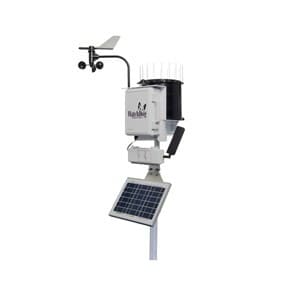
- WatchDog 2900ET (Spectrum): aimed at agriculture, it calculates evapotranspiration, records to non-volatile memory with configurable intervals, and accepts external sensors. It runs on batteries.
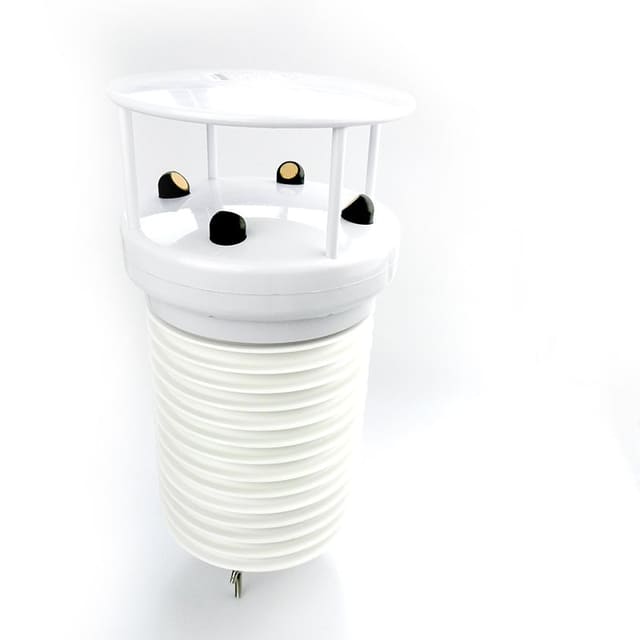
- HS14BSC kit: an ultrasonic station with a GSM/GPRS data logger, for accessing the data over the internet.
Checklist before you ask for a quote
- Today’s variables and tomorrow’s.
- The accuracy needed for each variable.
- How the data will leave the station and where it will go.
- The power available at the site.
- The installation point, the mast and access for maintenance.
- The calibration and cleaning routine.
If you would like help matching these criteria to your case, talk to a specialist or build your quote list.
Instruments for this application
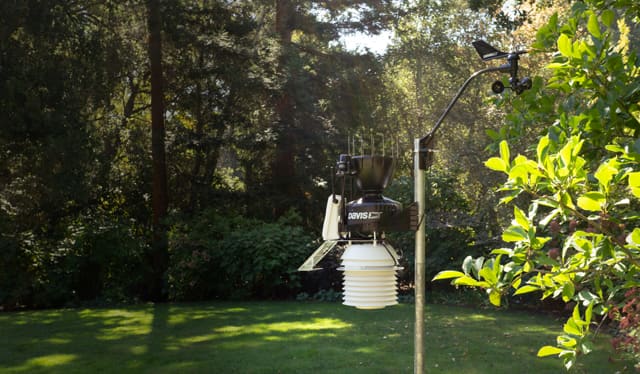
Davis InstrumentsVantage Pro2
Davis Vantage Pro2 Weather Stations
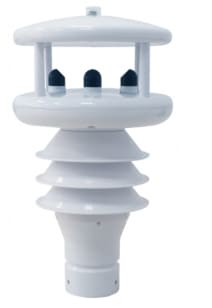
HenSistemasHS14EMD
HS14EMD Professional Ultrasonic Weather Station
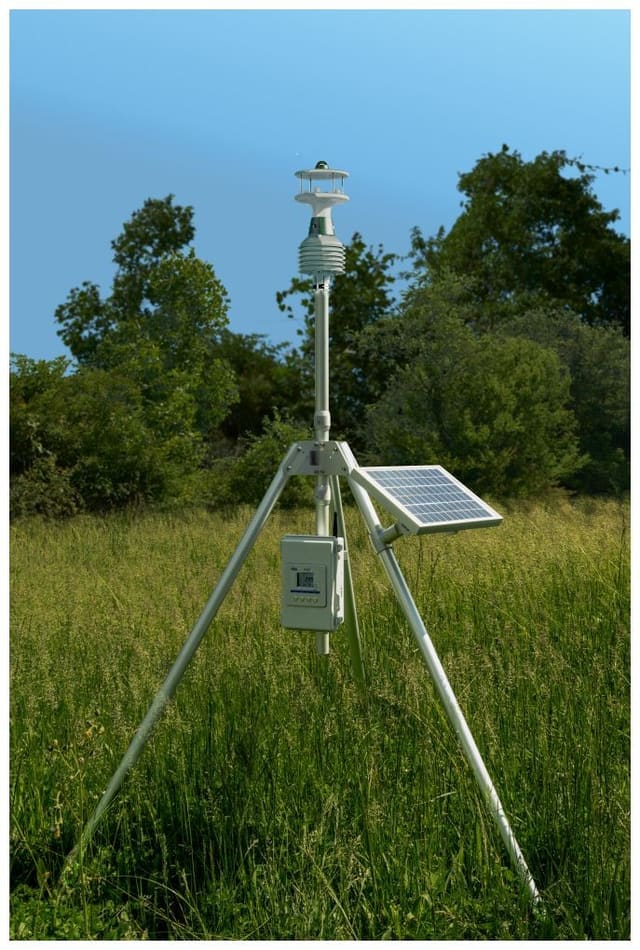
DeltaOhm - GHM GroupHDMCS-200
HDMCS-200 All-in-One Meteo Compact Station
Spectrum Technologies3350WD2
WatchDog 2900ET Weather Station
HenSistemasHS14BSC
HS14BSC Ultrasonic Weather Station Kit with GSM/GPRS Communication
Keep reading
Data logger: how to choose the right one
How to choose a data logger: the variables you need to record, the reading interval, memory, power supply and how to download the data.
Water quality: what to monitor?
Which parameters to follow to understand water quality, such as pH, dissolved oxygen, conductivity and turbidity, and what each one indicates.