
Water quality: what to monitor?
Which parameters to follow to understand water quality, such as pH, dissolved oxygen, conductivity and turbidity, and what each one indicates.
“Water quality” is not a single measurement. It is a set of parameters, and which ones matter depends on the use: a river, a well, an aquaculture pond and a treatment plant each call for different monitoring. This guide shows what each parameter indicates, how to decide between spot and continuous measurement, and what to check in the equipment before you buy.
Define the goal before the parameters
Four questions organize the choice:
- Which water body or process will be monitored? A river, lake, reservoir, groundwater, a culture pond, water treatment or effluent.
- Do you need a continuous record or spot checks? Continuous records show trends and events. Spot checks show a snapshot of the moment.
- Does a monitoring program or an environmental agency set requirements? If so, confirm which parameters and methods they ask for before choosing the equipment.
- Who will collect and interpret the data? That decides the communication, the software and the level of automation.
The basic parameters and what each one indicates
- Temperature. It affects how much gas the water can dissolve and how fast reactions run. It is also needed to compensate other readings, such as conductivity.
- pH. It tells you whether the water is acidic or alkaline. Sudden changes can point to a discharge or an ongoing biological process.
- Conductivity. It reflects the amount of dissolved ions. Salinity and total dissolved solids (TDS) are usually calculated from it. A sudden jump can indicate saline water or effluent entering. Prefer specific conductivity, which is temperature-compensated, when comparing readings taken at different times.
- Dissolved oxygen. It is essential for aquatic life and drops with organic load and with rising temperature. Optical sensors are common today and spare you some of the care that electrochemical sensors need.
- Turbidity. It shows the amount of suspended particles. It rises with rain and erosion. It tells you that particles are present, but not what they are made of.
- Oxidation-reduction potential (ORP). It indicates whether the water tends to be oxidizing or reducing. It is used in water treatment and in groundwater studies.
- Level or depth. Measured by pressure, it gives context to the other readings: the same concentration means different things when the river is high or low.
Additional parameters, depending on the case
- Chlorophyll a and blue-green algae, measured with optical sensors, help track algae growth in lakes and reservoirs.
- Specific ions, such as nitrate and ammonium, measured with ion-selective electrodes (ISE), when the interest is the presence of nutrients.
Some manufacturers offer probes with ports for adding these sensors later. It is worth asking how many ports there are and whether they accept any combination of sensors.
Spot or continuous measurement
- Spot: a portable probe, with a cable and a display, gives the result right away. It suits surveys and runs through several points, but it depends on an operator and a well-defined field procedure.
- Continuous: a probe installed at the site, with internal memory or telemetry, reveals variations through the day and events that a spot survey misses, such as a heavy rain or a night-time discharge.
- Dedicated sensors: a pH or conductivity sensor with a 4-20 mA analog output, connected to a data logger or an RTU, works when the interest is a single parameter at a fixed point.
Communication and power
- Digital interfaces such as SDI-12 and Modbus over RS485 connect the probe to data loggers, PLCs and supervisory systems.
- Internal memory, with programming done in the office, lets you install the probe and collect the data later.
- Wi-Fi, 3G and 4G carry the data to a platform without a site visit. Confirm cell coverage where the probe will be.
- Power: some probes run on batteries, others only on external power, and others on an external battery or a solar panel tied to a telemetry system. Check what the datasheet says and size for the period between visits.
Installation
- Choose a representative spot. Avoid backwaters, places very close to a discharge and zones where the water does not circulate.
- Protect the probe from current, debris and tampering with a suitable mount or pipe.
- Consider atmospheric pressure. To measure level, a vented cable compensates for changes in air pressure. Ask the manufacturer which option the model offers.
- Plan the cleaning. Algae and silt build up on the sensors and shift the readings, especially on optical ones. Some models come with an automatic wiper.
Calibration and maintenance
pH, conductivity, dissolved oxygen and turbidity sensors need calibration against standards, and the frequency depends on the sensor and on the water being monitored. pH, for example, uses buffer solutions. A factory calibration does not replace checks in the field. Follow the manufacturer’s manual, record every calibration and every cleaning, and compare the readings with a reference measurement from time to time.
Catalog equipment to compare
- Aqua TROLL 400 (In-Situ): a long-term probe with six sensors that records 12 parameters, including conductivity, optical dissolved oxygen, pH, ORP, temperature and level. It has SDI-12 and Modbus/RS485 outputs and runs on external power.
- Aquasonde-2000 (Aquaread): a probe for long-term installation, with internal memory and programming from a computer. It comes with the standard parameters of the line and accepts one optional optical sensor and one optional ISE sensor.
- Aquaprobe AP-5000 (Aquaread): a portable probe with optical dissolved oxygen, conductivity, pH, ORP, TDS, salinity, temperature and depth, and four auxiliary ports for additional sensors.
- WiMo (nke Instrumentation): a probe that accepts up to seven digital sensors, measures up to 20 parameters, has a sensor wiper and connects over Wi-Fi, with a 3G and 4G communication option.
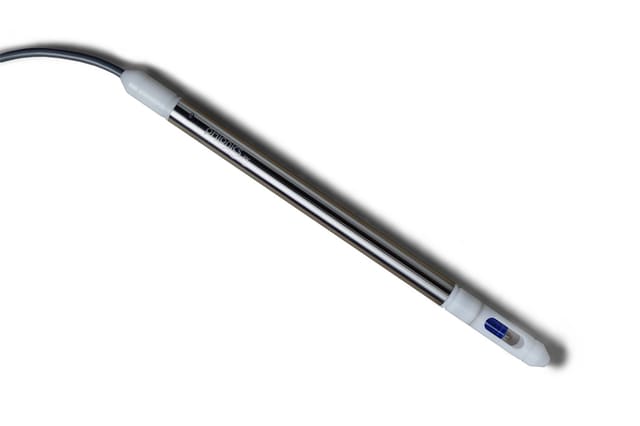
- STs pH (pHionics): a pH and temperature sensor with a 4-20 mA output, designed to work with a data logger or an RTU.
Checklist before you ask for a quote
- The water body or process and the goal of the monitoring.
- The parameters you need, and those that can come later.
- Spot or continuous measurement.
- How you will access the data and the power at the installation point.
- The calibration and cleaning plan.
If you would like help building this list for your case, talk to a specialist or build your quote list.
Instruments for this application
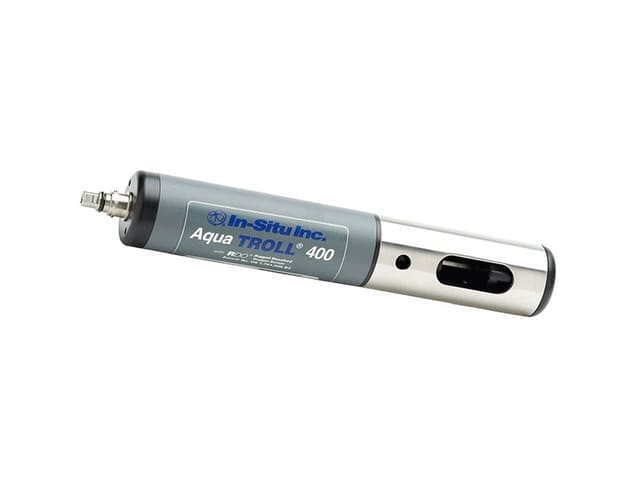
In-SituAquaTROLL-400
Aqua TROLL 400 Multiparameter Water Quality Instrument
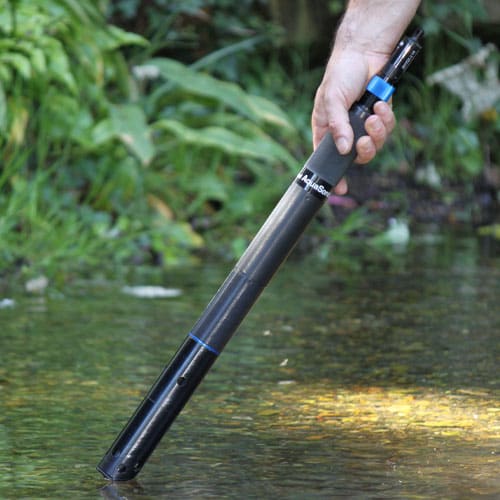
AquareadAS-2000
Aquasonde-2000 Multiparameter Water Quality Probe
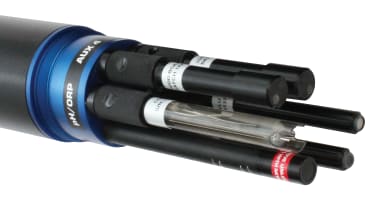
AquareadAP-5000
AP-5000 Advanced Portable Multiparameter Aquaprobe
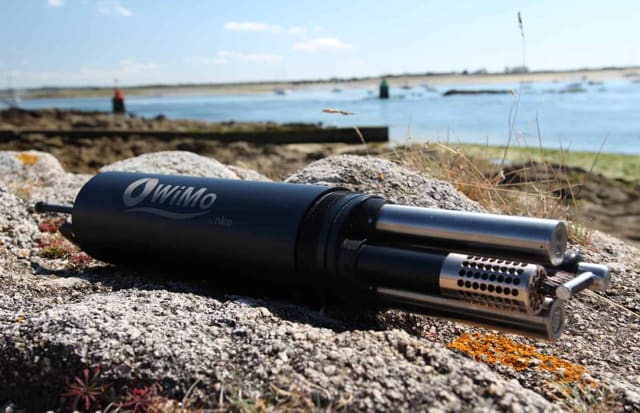
nke InstrumentationWIMO
WiMo Multiparameter Probe for up to 20 Water Parameters
Keep reading
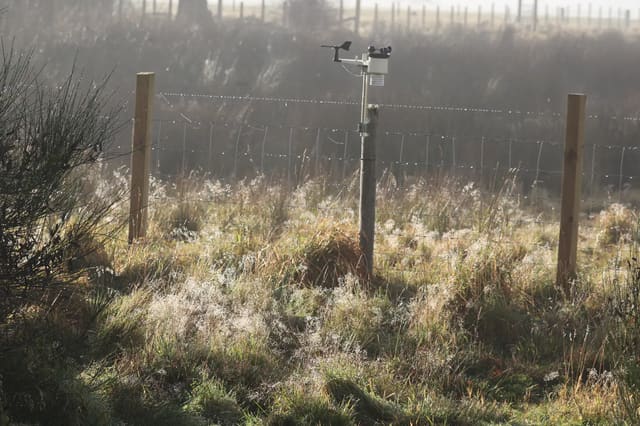
How to choose a weather station
What to consider when choosing a weather station: the variables you need to measure, the installation site, the power supply and how to access the data.
Data logger: how to choose the right one
How to choose a data logger: the variables you need to record, the reading interval, memory, power supply and how to download the data.