
Meteorology · Technical guides
Compact weather stations with no moving parts: what changes in field research
How compact stations with ultrasonic wind and radar rainfall work, when they fit research, and how to integrate them over Modbus.
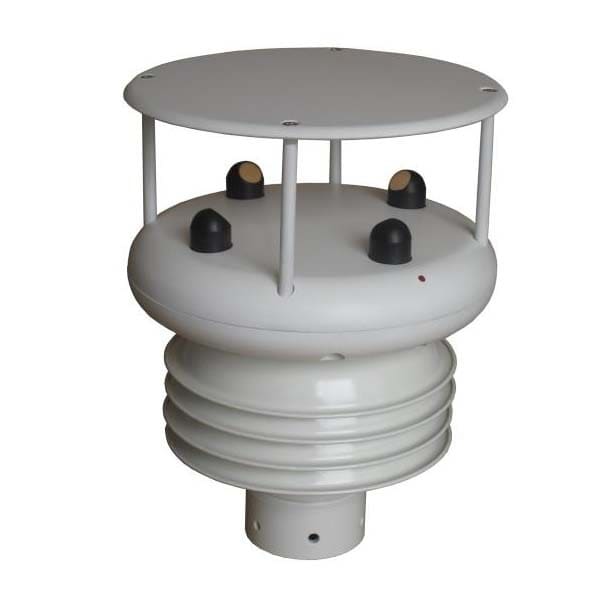
When field research needs a continuous series of temperature, humidity, pressure, wind and rain, choosing a station is no longer only “which brand to buy”. It becomes how the sensor behaves over months and how it talks to the system you already run.
This article deepens a point that the guide How to choose a weather station only introduces: compact stations with no moving parts, with ultrasonic wind, radar rainfall and an industrial output (usually Modbus over RS485/RS232). They are widely used in agricultural and environmental research in Brazil when the site is remote or the team cannot visit the mast every week.
What a compact all-in-one station usually measures
In a single enclosure this class of instrument typically covers six variables:
- Air temperature — a wide range (for example −40 °C to +80 °C), with accuracy on the order of tenths of a degree.
- Relative humidity — 0 to 100%, often around ±2% accuracy.
- Atmospheric pressure — a range that covers high altitudes through sea level.
- Wind speed — by an ultrasonic principle (no cups).
- Wind direction — also ultrasonic, 0–359°.
- Precipitation — in many compact models, by radar, instead of a tipping bucket.
Temperature, humidity and pressure probes sit inside a radiation shield. Without it, sunlight heats the sensor and the reading stops representing ambient air — a classic error on stations poorly installed in open Brazilian landscapes or on roofs.
Why “no moving parts” matters for research
Cup anemometers and tipping-bucket rain gauges are mature and easy to check in the field: you can spin the shaft at a known speed or pour a calibrated volume of water. In return they need frequent cleaning and suffer from insects, ice, dust and bearing wear.
An ultrasonic sensor measures the time of flight of sound between transducers. There is no shaft to seize. Field and audit literature treat routine sonics as attractive for continuous monitoring for that reason: fewer mechanical parts, a small cross-section to the wind and solid-state electronics. That does not remove maintenance — surfaces still need cleaning and periodic checks — but it reduces failures that break a multi-month time series, the nightmare of any experiment.
Radar rainfall follows the same logic: fewer moving parts, fast detection of the start and end of an event. The check procedure changes: instead of “pour water into the bucket”, the team needs a collocated reference or the manufacturer’s method.
Integration: the reading only helps if it reaches your system
In a field lab and in research networks the practical question is: does the station speak the language of my logger or PLC?
RS485/RS232 outputs with the Modbus protocol are the usual way to plug the station into a multi-channel data logger, a gateway or a supervisory system already in place. Power at 12 V or 24 V DC and low draw (a few watts, a little more with internal heating for cold operation) make it possible to size a solar panel and battery for off-grid points — a common inland Brazil scenario.
Some models accept an electronic compass and GPS (or BeiDou). With position and relative speed, the station can estimate true and apparent wind — useful on moving platforms (research vehicle, boat), not only on a fixed mast.
Update rate also matters: updates on the order of 1 second (when configurable) help experiments that look at gusts or short rain fronts; 1-minute or 1-hour averages are enough for water balance and local climatology.
When this profile is usually the right choice
- Agricultural or environmental research sites with little access for mechanical maintenance.
- Networks with many masts where the team standardized on Modbus/RS485.
- Installations on a moving structure or where mechanical failure risk is high.
- Projects that already have a logger and only need the six-variable meteorological core.
If your protocol needs a local console display, a solar panel built into the station itself or native evapotranspiration, also compare console stations and kits with a GSM logger — the general selection guide above orders those criteria.
An example in the catalog
In the HenSistemas catalog, the compact weather station matches this profile: six variables in one body, ultrasonic wind, radar rainfall, Modbus over RS485/RS232, 12/24 V DC power and optional GPS and compass. Use the datasheet to compare range, accuracy and resolution variable by variable — and complete the site with complementary sensors (solar radiation/PAR, soil moisture, multi-channel logger) listed as related products on the same page.
A teaching checklist before you request a quote
- Which of the six variables are mandatory in the protocol — and what might come later?
- Does the logger or software accept Modbus over RS485/RS232?
- Is 12/24 V DC (grid or solar) available on site? Is internal heating in the energy budget?
- Is the site easy to reach, or must maintenance stay minimal?
- Will the station stay fixed or ride a moving platform (GPS/compass)?
- Who will clean, run collocated checks and calibrate — and how often?
Writing the answers down usually rules out the wrong models before the quote. To match a research protocol to the catalog, talk to the HenSistemas team.
Instruments for this application
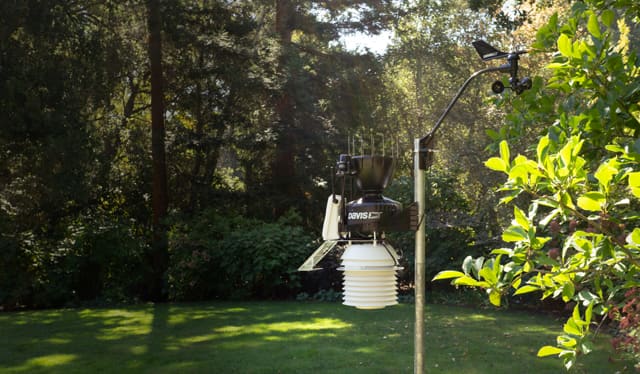
Davis InstrumentsVantage Pro2
Davis Vantage Pro2 Weather Stations
HenSistemasHS14EMD
HS14EMD Professional Ultrasonic Weather Station
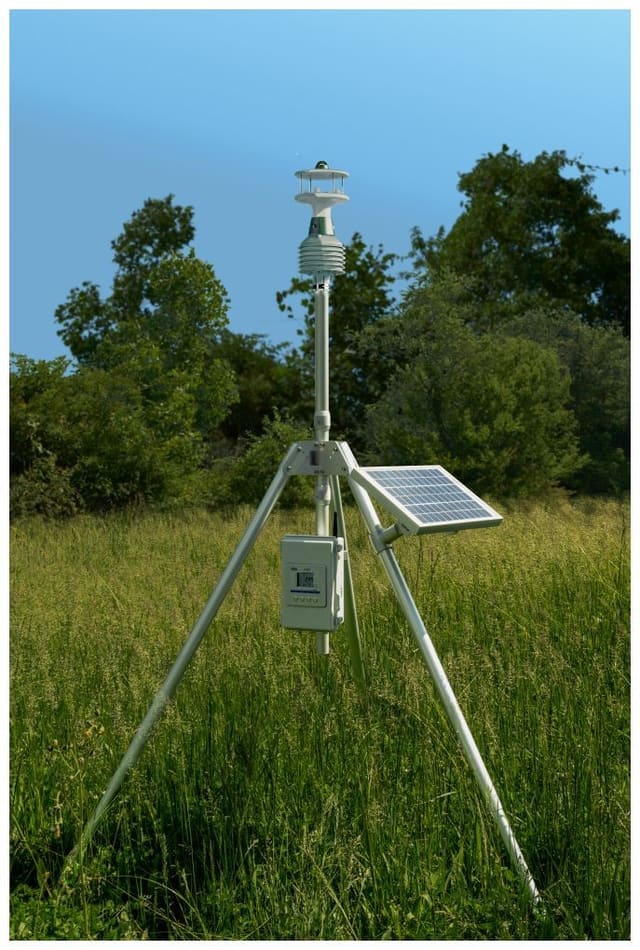
DeltaOhm - GHM GroupHDMCS-200
HDMCS-200 All-in-One Meteo Compact Station
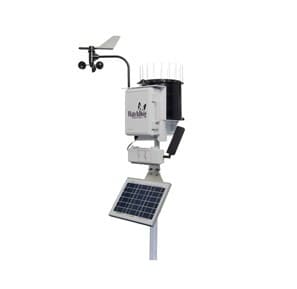
Spectrum Technologies3350WD2
WatchDog 2900ET Weather Station
Keep reading
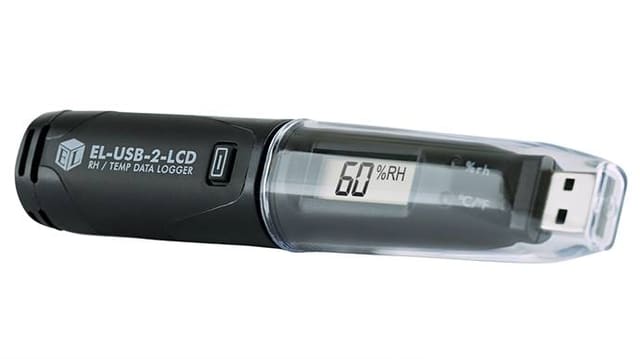
Animal environment in research: how to measure temperature, humidity and black globe in livestock buildings, calculate THI, BGHI and enthalpy and combine them with the weather station
A didactic guide to measuring the thermal environment in poultry houses, dairy barns and paddocks: why a thermometer alone is not enough, black globe temperature, air velocity, the THI, BGHI, radiant heat load and enthalpy indices (with local pressure), choosing a temperature and humidity logger and propagating its error, standard and alternative globes, installation, intercalibration, salt solutions, ammonia, quality control, a worked example, combining with the weather station and applications in Brazilian research.
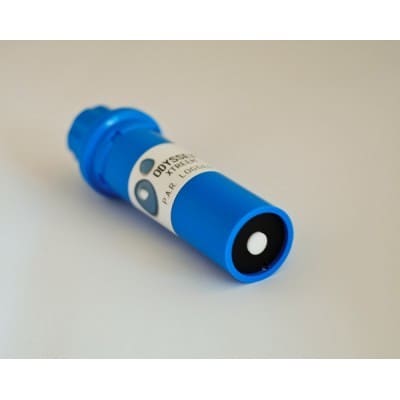
Underwater light in research: how to measure PAR below the surface with a submersible logger, calculate the attenuation coefficient and euphotic zone and combine it with the weather station
A didactic guide to measuring photosynthetically active radiation underwater in lakes, reservoirs, ponds and coastal waters: why the Secchi depth is not enough, the Beer-Lambert law, the attenuation coefficient Kd and euphotic zone, limits of the 1.7 factor (Padial and Thomaz), the immersion effect and when it cancels out, logger calibration and intercalibration, mounting, biofouling, step-by-step calculation with a worked example, combining with weather-station PAR, rain and wind, and applications in Brazilian research.
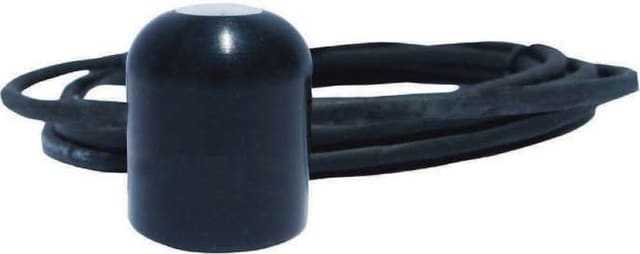
Silicon-cell pyranometer at the weather station: when it is enough, where the errors come from and how to calibrate it against a thermopile
A didactic guide to silicon photodiode pyranometers at research stations: how they work, why calibration holds for clear skies, spectral error under clouds and in reflected light, cosine response, temperature, dirt on the acrylic diffuser and drift, what ISO 9060:2018 says (Class C, not spectrally flat), when the sensor is enough, field cross-calibration against a thermopile with a clear-sky filter and worked example, the FAO-56 Rso envelope, integration to MJ/m²·day, effect on ET₀, dense low-cost networks and Brazilian references.