
Portable laser speed guns for enforcement: what to measure and how to keep evidence
Technical guide to laser TOF measurement, photo/video evidence, night IR operation and a secure data chain in portable speed enforcement.
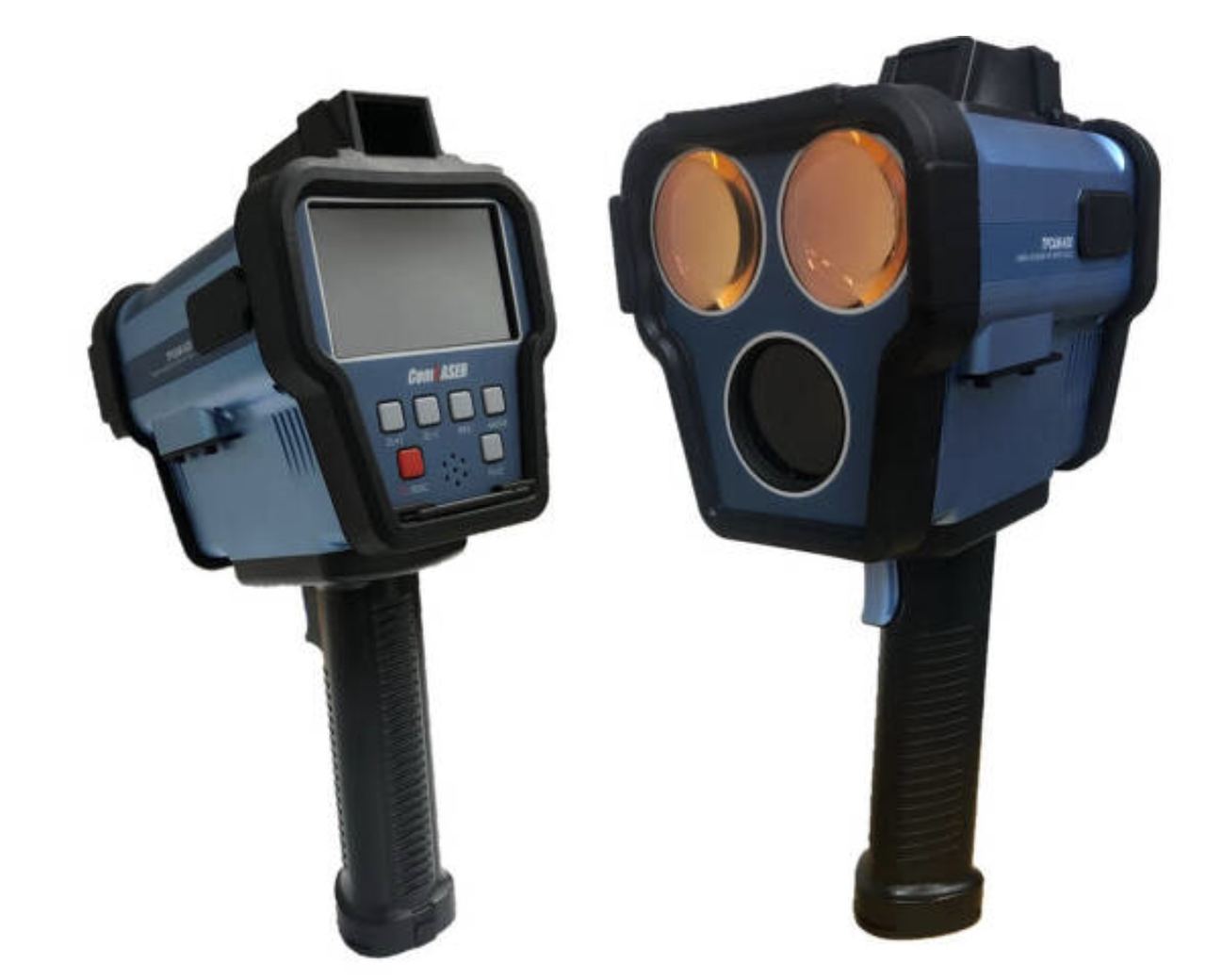
In speed enforcement on highways and urban roads, the instrument is more than “a meter”: it must lock onto the right target, tie speed to visual evidence, and preserve the data chain through review. Technical teams in road agencies and traffic engineering increasingly evaluate portable laser solutions when the measurement point moves often or when a fixed Doppler radar does not cover the segment.
This guide explains, in didactic language, what to measure, how photo and video evidence enter the workflow, and which technical criteria usually decide whether a portable laser speed camera fits your protocol — without legal advice.
Principle: laser time-of-flight versus Doppler
Two classic principles dominate vehicle speed measurement:
- Doppler microwave radar — emits a continuous wave and estimates speed from the frequency shift reflected by the vehicle. It is common on fixed poles and gantries, with good lane coverage, but geometry and incidence angle need correction and a stable install.
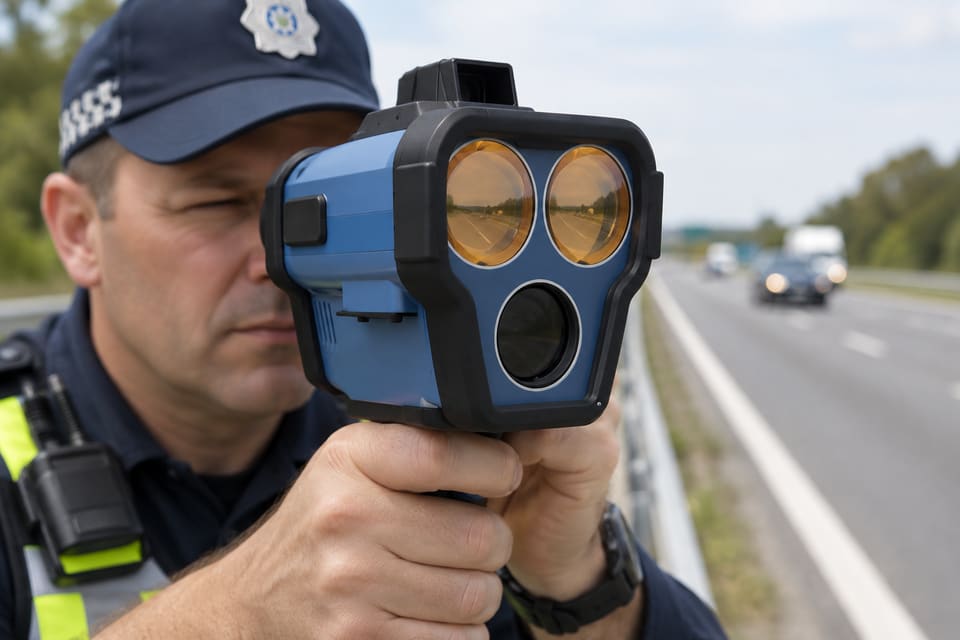
- Laser time-of-flight (TOF) — emits short pulses (typically at 905 nm) and measures distance from the round-trip time of the beam. Speed comes from the change of distance over time. The beam is narrow (for example divergence on the order of 2.5 mRad), which favors selecting one specific vehicle in mixed traffic — the typical roadside portable scenario.
For eye safety, portable enforcement instruments in this class are commonly Class 1 under IEC-60825-1: the beam is designed for safe use under the manufacturer’s nominal conditions. That does not replace training or the agency’s internal procedure.
Typical ranges for a high-performance portable unit illustrate what the team should check on the datasheet: reflective-target range on the order of 1,200 m (minimum near 5 m), range accuracy around ±15 cm, speed range on the order of ±320 km/h, speed accuracy typically ±1 km/h, and measurement time around 0.3 s. These numbers help size the post (target distance, error margin, aim settle time) — they do not replace calibration and periodic checks required by your protocol.
Evidence: photo, video and optical zoom
Measuring speed is necessary; proving the event, in enforcement practice, depends on associated evidence. In portable laser units with an integrated camera, the typical package includes:
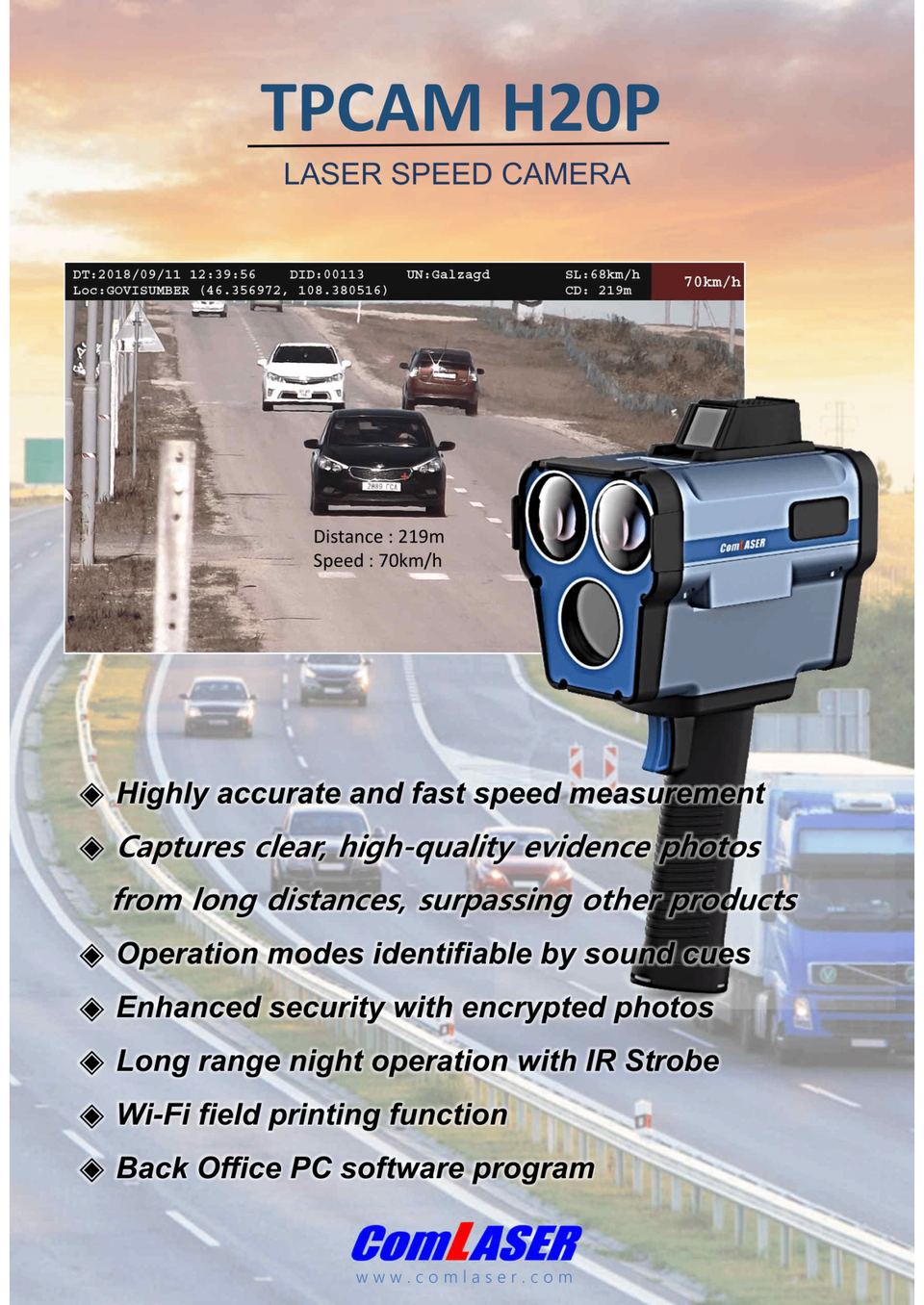
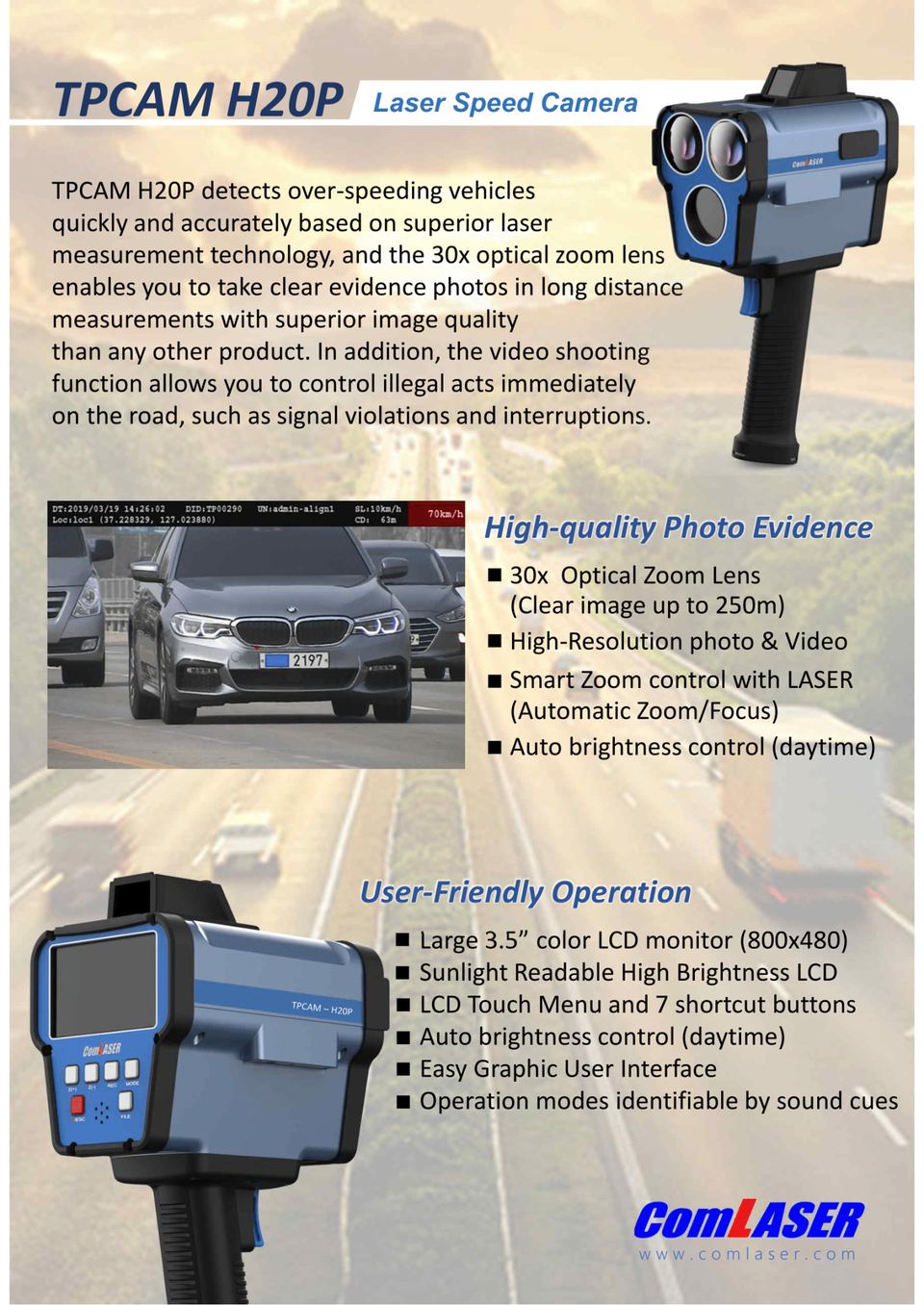
- Optical zoom (for example 33×), enabling sharp evidence photos out to about 250 m — useful when the operator must stand clear of the immediate risk lane.
- Photo and video at roughly 1712×888, with video at 30 fps, to capture not only the plate but the motion context.
- An LCD (for example 3.5″, 800×480, touch, sunlight-readable) to confirm framing and reading in the field without relying only on a phone.
In later review, analysis software should recover: equipment ID, location, speed limit, offense speed, and plate zoom. Without that trail, an isolated measurement loses operational value.
Night operation and IR strobe
At night or in low light, the camera alone rarely delivers a readable plate. Portable solutions may add an optional infrared LED strobe with a night filter. Typical clear-capture distances are on the order of ~70 m for a non-reflective plate and ~150 m for a reflective plate — values the team should validate on the actual stretch (angle, humidity, plate contrast).
IR does not “improve” laser accuracy; it lights the evidence. A night post checklist therefore includes a plate-contrast test and a check that the strobe fires in sync with capture.
Data chain, GPS and security
After capture, the record must reach the review system intact. Recurring criteria in professional gear include:
- Generous local storage (for example 128 GB, expandable to 512 GB).
- USB 2, SD card, USB copy, and in many workflows Wi-Fi to the operator’s phone.
- Field printing when the local procedure asks for an immediate slip.
- AES-256 encrypted file transfer and, when the network allows, FTP over TCP/IP.
- A 72-channel GPS to georeference the point; anti-jam detection helps flag attempts to block the signal.
In mobile enforcement, GPS + equipment ID + capture timestamp is what lets auditors show where and with which instrument the evidence was produced. Encryption on transfer reduces tampering risk on the way to the server — while key and access policy remain the agency IT/security team’s responsibility.
When the portable laser profile usually fits
- Temporary or rotating posts on highways and urban approaches, with frequent site changes.
- Stretches where the team must aim at one specific vehicle in the flow (narrow beam) rather than illuminate a whole lane.
- Operations that need photo/video evidence in the same shot as the speed measurement.
- Day and night shifts, provided the IR kit (when needed) is sized for plate distance.
- Teams that already standardize centralized review with secure transfer and equipment/location/limit metadata.
If your project is continuous fixed monitoring of a multi-lane section, a fixed Doppler or lidar gantry system may fit better. Portable laser shines in operational flexibility and target selectivity, not necessarily in 24 h corridor coverage.
One catalog example
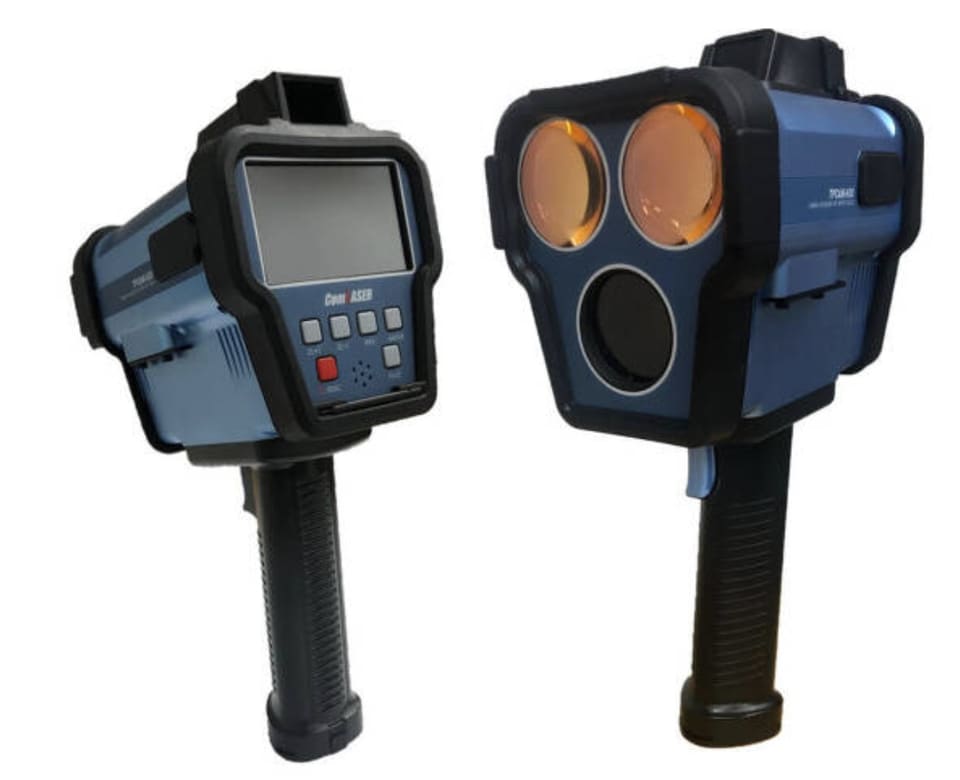
In the HenSistemas catalog, the portable laser speed camera illustrates this portable enforcement profile: range to 1,200 m on reflective targets, ±1 km/h speed accuracy, 0.3 s measurement, 33× optical zoom with photo/video evidence, 3.5″ sunlight-readable LCD, GPS, AES-256 transfer, 905 nm Class 1 laser (IEC-60825-1), and about 1.65 kg with detachable grip battery. Use the datasheet to compare range, optional IR, and the review workflow before you lock your agency’s post template.
Didactic checklist before budgeting
- What is the typical operator–target distance and expected speed band on the stretch?
- Does the protocol require photo, video, or both — and at what distance must the plate stay readable?
- Will there be night work? Does the IR strobe cover plate distance (reflective vs. non-reflective)?
- How does evidence reach the central system: USB, SD, Wi-Fi, FTP — and with AES-256?
- Does review recover equipment ID, location (GPS), limit, and offense speed?
- Who calibrates, verifies, and trains aim/angle — and how often?
- Do weight (~1.6 kg), detachable battery autonomy, and the −10 to +60 °C range match the field shift?
Answering these in writing usually eliminates unfit models before quotation. If you want to cross-check an enforcement protocol against the catalog, talk to the HenSistemas team.
Instruments for this application
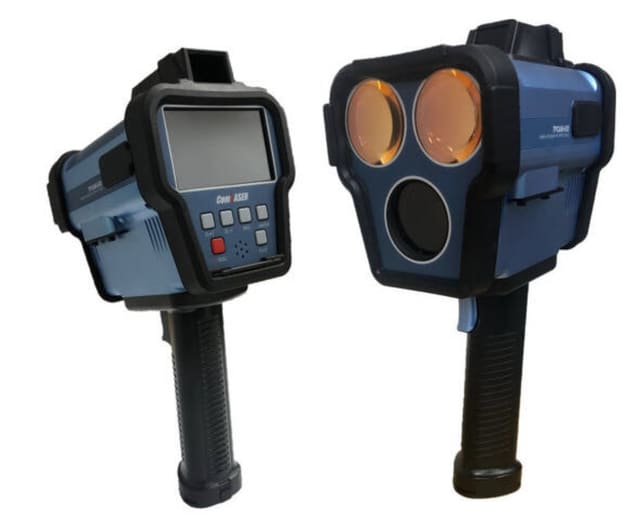
ComLaserTPCAM H20P
TPCAM H20P Laser Speed Radar
Keep reading
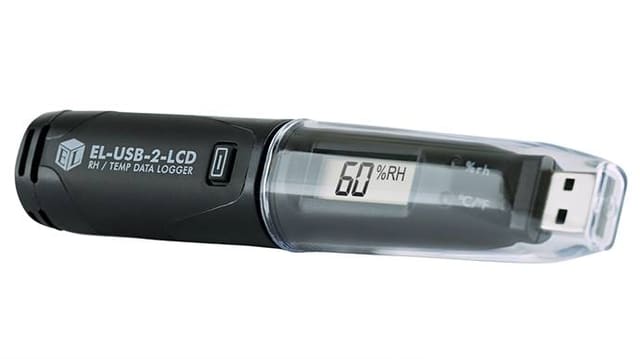
Animal environment in research: how to measure temperature, humidity and black globe in livestock buildings, calculate THI, BGHI and enthalpy and combine them with the weather station
A didactic guide to measuring the thermal environment in poultry houses, dairy barns and paddocks: why a thermometer alone is not enough, black globe temperature, air velocity, the THI, BGHI, radiant heat load and enthalpy indices (with local pressure), choosing a temperature and humidity logger and propagating its error, standard and alternative globes, installation, intercalibration, salt solutions, ammonia, quality control, a worked example, combining with the weather station and applications in Brazilian research.
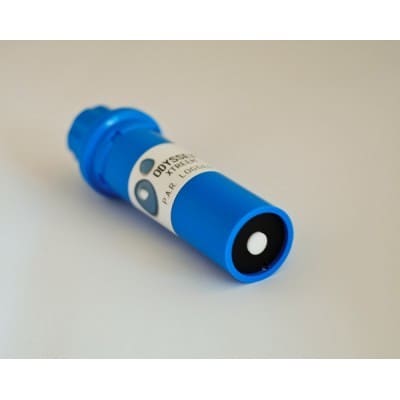
Underwater light in research: how to measure PAR below the surface with a submersible logger, calculate the attenuation coefficient and euphotic zone and combine it with the weather station
A didactic guide to measuring photosynthetically active radiation underwater in lakes, reservoirs, ponds and coastal waters: why the Secchi depth is not enough, the Beer-Lambert law, the attenuation coefficient Kd and euphotic zone, limits of the 1.7 factor (Padial and Thomaz), the immersion effect and when it cancels out, logger calibration and intercalibration, mounting, biofouling, step-by-step calculation with a worked example, combining with weather-station PAR, rain and wind, and applications in Brazilian research.
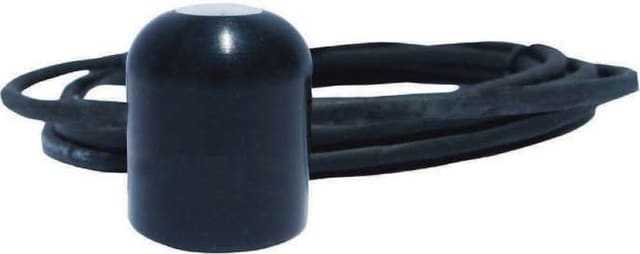
Silicon-cell pyranometer at the weather station: when it is enough, where the errors come from and how to calibrate it against a thermopile
A didactic guide to silicon photodiode pyranometers at research stations: how they work, why calibration holds for clear skies, spectral error under clouds and in reflected light, cosine response, temperature, dirt on the acrylic diffuser and drift, what ISO 9060:2018 says (Class C, not spectrally flat), when the sensor is enough, field cross-calibration against a thermopile with a clear-sky filter and worked example, the FAO-56 Rso envelope, integration to MJ/m²·day, effect on ET₀, dense low-cost networks and Brazilian references.