
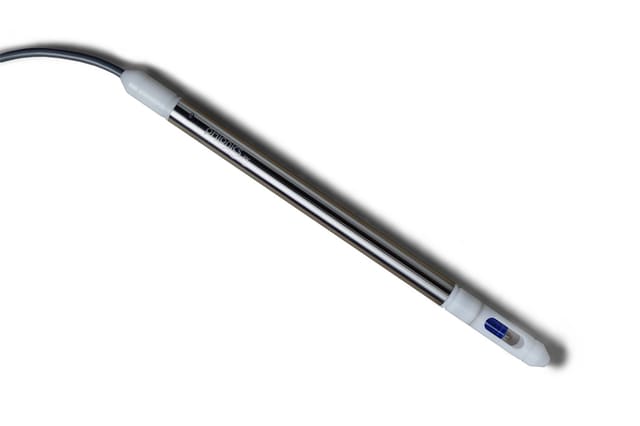
PhionicsSTs pH
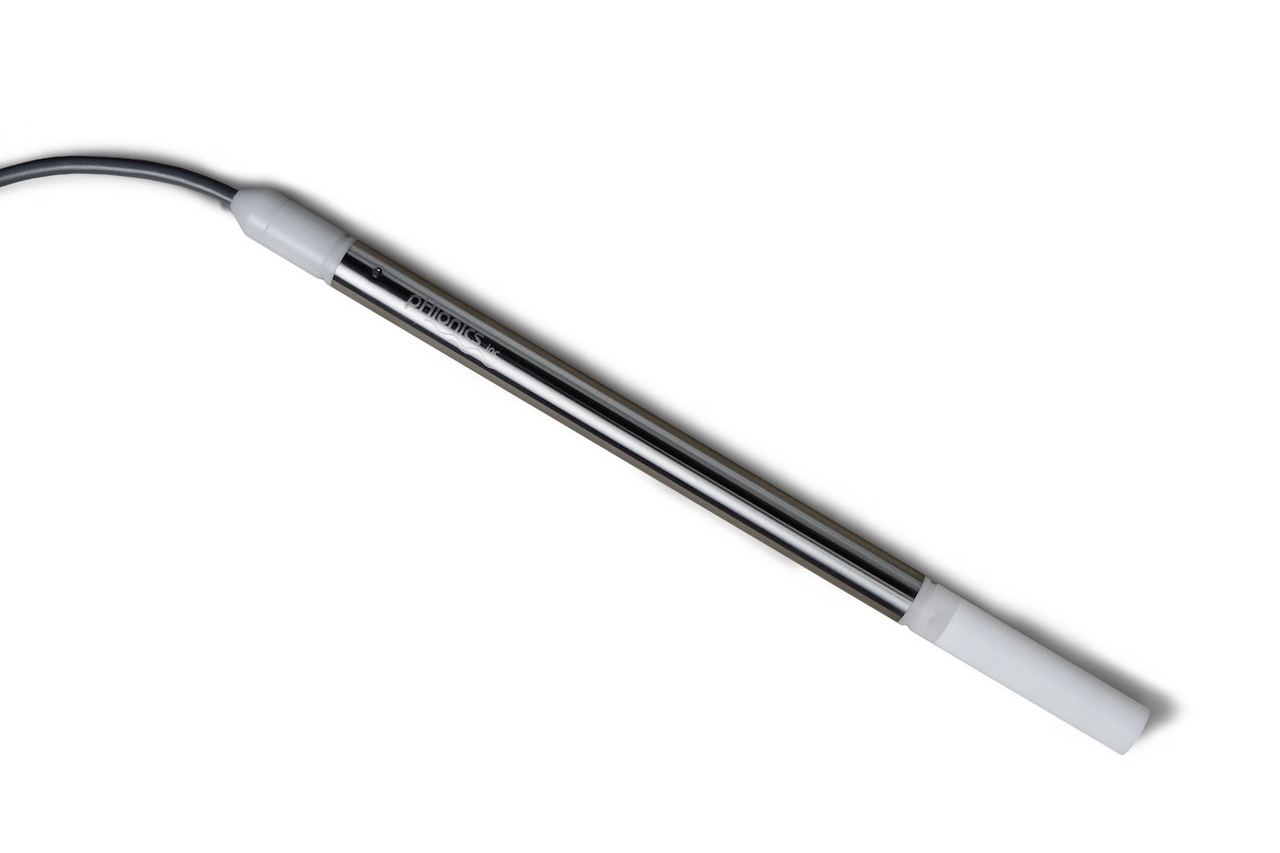
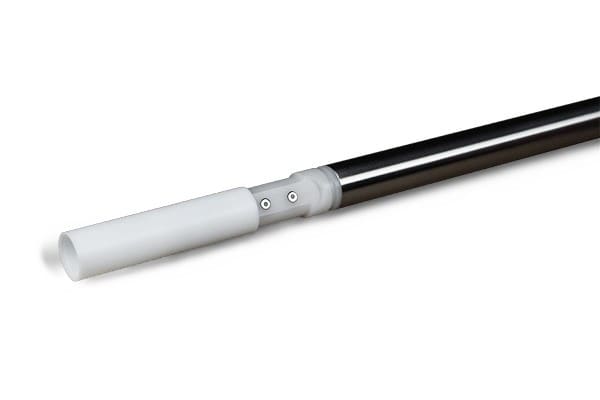
pHionics has combined a conductivity sensor and a temperature sensor in a single compact, isolated, 2-wire, 4-20 mA device with outstanding durability and accuracy. The 4-cell electrode with a removable guard is easy to clean and avoids common problems such as polarization and debris build-up that would otherwise interfere with conductivity, salinity or total dissolved solids readings.
The 2-wire 4-20 mA output connects easily to any analog data logger, controller or PLC.
Price on request
No sign-up. You review the list and send it when you are ready.
Torn between two models?
Ask on WhatsAppSaves this product and the next ones you view in this browser, up to eight, for 30 days. You can disable it under “History” in the footer.
History is enabled in this browser. History
The electrode is made of chemically resistant Delrin®, which lets pHionics extend its 2-year warranty to the electrode. With proper care, the electrode and the sensor/transmitter can last up to 20 years, offering significantly better long-term value than competing products.
Together with the small diameter (0.75″ or 19 mm), which cuts installation costs, the features of the pHionics STs sensors/transmitters ensure accurate conductivity measurement and excellent long-term value.
For data logging applications, pHionics recommends pairing its devices with the HOBO RX3000: watch the video on setting up the STs sensor with the HOBO RX3000 data logger.
From clear streams reached only by radio frequencies to wastewater treatment plants surrounded by heavy machinery, background noise and interference can turn up anywhere. Signal conditioning removes common-mode background noise from the measurement to ensure high accuracy. The signal also goes through a differential amplifier that boosts it before it travels along a shielded twisted-pair cable, which protects the amplified 4-20 mA signal all the way to the data logger or controller.
Typical 2-wire transmitters are fairly easy to set up, but incorrect wiring can damage the transmitter or the controller, at high cost. The STs Series prevents this with reversible input protection, so the two wires for each parameter can be swapped without affecting operation. In addition, every part, cable included, can be replaced quickly and easily without special tools. This cuts maintenance time and cost, especially where cable damage would otherwise mean replacing traditional sensors and transmitters entirely.
The isolation system removes ground loop interference, saving time and money on troubleshooting, and prevents damage to connected electronics during power surges of up to 600 V. This allows the STs Series to be used in process control applications without concern for differing ground potentials of the solution or the mounting surface. It also helps protect connected devices and people if they are exposed to large currents caused by damaged machinery or improper wiring.
Sensors and transmitters from other manufacturers usually draw an extra 3-15 mA on top of the 4-20 mA signal to power their devices. pHionics uses only the current the signal needs, so STs Series devices run 60% to 375% longer on the same battery. The STs Series also needs only 8 VDC and has a three-second power-up time, which lowers energy use even further.
The sensor/transmitter and cable can be submerged in any body of water at approximately 100 psi, or mounted in a stilling well along a river so that currents cannot sweep the transmitter away or knock it against loose rocks. They can hang freely from the Kevlar-reinforced cable or be mounted permanently in a cooling tower, process tank or sewer well. The sensor/transmitter is easily mounted for insertion or submersion by simply placing a 3/4″ MNPT compression cable gland at the required position. In-line mounting is also possible with the 1″ MNPT DIN connector option, which replaces the cable assembly.
For submersion, the best place for the cable gland is between the dashes on the sensor, with the threads facing the cable end. For the best results, however, the gland should be mounted towards the cable end of the transmitter housing, which lets the temperature output and temperature compensation perform at their best.
Tighten the fitting until it grips the sensor firmly; do not overtighten or over-compress the ferrules, which can damage the seals. The fitting is then threaded and sealed into a 3/4″ NPT female fitting joined to a length of pipe that reaches the depth needed to monitor or control a process in a tank or well, for example. The material chosen must be compatible with the solution it will be immersed in; inexpensive 3/4″ PVC pipe works well for most applications.
Alternatively, the fitting can be threaded and sealed into a 3/4″ by 1-1/2″ adapter for use in a 1-1/2″ tee, or into a tank adapter extending to the required length to monitor or control a process in a tank or pipe, for example. The material chosen must be compatible with the solution it will touch. For most parameters (except conductivity and temperature), the sensor/transmitter tip should point at least thirty degrees below the cable to avoid trapping air in the reference solutions or the measuring electrode. Make sure the stainless steel housing is in contact with the solution being measured; otherwise the differential amplifiers will not work properly and readings will look erratic.
In insertion applications, take extreme care when inserting or removing the sensor/transmitter: 100 psi can turn it into a lethal projectile, ripping conduit out of walls, and can cause serious injury or death through trauma or contact with the solution. pHionics is not responsible for, and does not warrant, insertion applications; proceed with caution.
For many insertion applications, the pHiDIN connector option makes a safe, easy-to-maintain installation simpler. The connector has a 1″ NPT PVDF fitting that suits most industrial applications (not all; please check chemical compatibility charts) and a common DIN connector that is easily wired with low-cost instrumentation cable and flexible conduit. Insertion depth is approximately 12.75 in or 32.39 cm. The setup shown takes advantage of popular, and therefore inexpensive, 1-1/2 inch NPT fittings that allow the sensor/transmitter to be removed or inserted easily and safely. This union costs an order of magnitude less than many of the commercial mounts required for conventional industrial sensors.
| Property | Value |
|---|---|
| Output (conductivity) | 4-20 mA |
| Conductivity range | 0-100 µS, 0-200 µS, 0-500 µS, 0-1000 µS, 0-2000 µS, 0-5000 µS, 0-10,000 µS, 0-20,000 µS, 0-50,000 µS, 0-100,000 µS |
| Electrode type | 4-cell |
| Transmitter type | 2-wire |
| Automatic temperature compensation | 2% per °C |
| Isolation | 600 VDC |
| Supply voltage | 8-40 VDC |
| Loop impedance (max.) | 200 Ohms at 12 VDC; 800 Ohms at 24 VDC; 1600 Ohms at 40 VDC |
| Response time | 95% < 5 seconds |
| Pressure range | 0-50 psi |
| Materials | 316 stainless steel, Delrin, Viton, glass |
| Length | 14.50 in (36.83 cm) |
| Width | 0.750 in (1.9 cm) maximum |
| Weight (without cable) | 0.50 lbs (0.227 kg) |
| Linearity | ± 1.00% of full scale (after proper calibration) |
| Accuracy | ± 1.00% of full scale (after proper calibration) |
| Sensitivity | ± 0.05% of full scale |
| Stability | ± 0.10% of full scale |
| Repeatability | ± 0.10% of full scale |
| Output (temperature) | 4-20 mA |
| Temperature range | 0-50°C |
| Supply voltage (temperature) | 7-40 VDC |
| Loop impedance, max. (temperature) | 250 Ohms at 12 VDC; 850 Ohms at 24 VDC; 1650 Ohms at 40 VDC |
| Isolation (temperature) | 600 VDC |
| Cable material | Polyurethane |
| Cable type | 4-conductor, Kevlar-reinforced, watertight, shielded, twisted-pair wiring |
| Maximum cable distance | 4828m |
| Cable resistance per 1000 ft (304.8 m) | 26 Ohms |
| Replaceable cable | Yes |
Tell HenSistemas about your application.