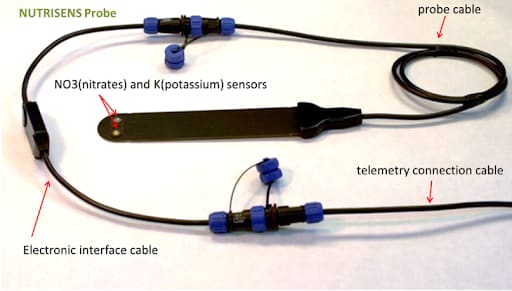
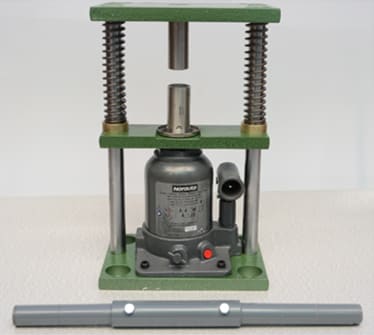
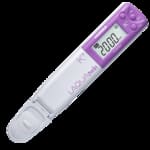
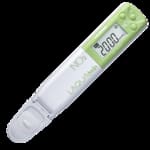
The NUTRI14 brings sap analysis out to the field: petioles are pressed on the spot and LAQUAtwin meters give nitrate and potassium readings without waiting for a laboratory.
Extractor features
- Two stainless steel cups: 1 cup of 25cc for trees and fruit crops and another of 50cc for vegetable crops. 50cc is enough for analysis with Horiba.
- Stable in use: its weight keeps it steady while you work. It is built in iron, and can be made in aluminum when a lighter unit is needed.
- Automatic return: a spring system brings it back to the starting position as soon as the hydraulic jack valve is opened.
Sap as part of a working method
Sap readings should not be used on their own. They are combined with nutrient concentration measurements at the dripper, in suction probes at the roots and in drainage. Because sap reflects nutrition events over the last few days, its value is the balance between nutrient uptake and consumption.
- Sensitivity: the diagnosis can be tailored to each farm; to avoid errors, samples are taken under a defined working protocol that brings together dripper, soil and plant data.
- Traceability: final results are referenced to the farm’s own nutritional states, which then serve as a reference for the coming years.
- Savings: fewer laboratory analyses, and combining the readings with other indicators makes diagnosis possible during the same visit.
From intuition to data
- Objective diagnosis: a farm visit is no longer just a “visual impression”; it adds objective data, which may take 20 minutes per variety. Trusted staff can do part of the work on the farm itself.
- Same-day results: the nutritional state of the plants is known on the day the sample is taken.
- Decisions during the visit: fertigation can be adjusted on the same round, which matters in critical crop stages where there are only 2-4 weeks to manage vigour and controlled stress.
- Many more diagnoses: a season goes from 4-5 objective diagnoses of how fertigation affects soil and plant to 20-50 potential diagnoses.
Results
- Input savings: weekly diagnosis is delivering savings of 70% of nitrate in citrus, berries, tomato and other crops.
- Fruit size and flower induction: supplying potassium and calcium when the plant needs them is improving yield and fruit size in different crops.
- Post-harvest quality: keeping excess nitrogen in check extends fruit shelf life and reduces the impact of diseases.
- Sustainability: it is the first method that will serve to control nitrate contamination in soil.