
AranetTDSPT801



Light, Solar Radiation and PAR
EKO's new Solar Monitoring System, the STR-21G-S2, is a dedicated sensor system for the most accurate measurements of the three solar radiation components (direct, diffuse and global).
It can be easily integrated into any DAQ system with multiple analog or digital inputs. With the standard sun-position sensor and GPS receiver built into the sun tracker, setup is quick and easy.
Price on request
No sign-up. You review the list and send it when you are ready.
Torn between two models?
Ask on WhatsAppSaves this product and the next ones you view in this browser, up to eight, for 30 days. You can disable it under “History” in the footer.
History is enabled in this browser. History
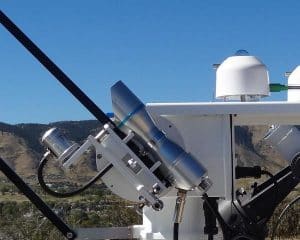
The system is based on the STR-21G sun tracker with a new shading disk assembly that can be mounted on one arm of the tracker. Combined with the new-generation MS-80 secondary standard pyranometer and the MS-57 first class pyrheliometer, the STR-21G-S2 is the most “high end” sensor system for solar energy research.
The STR-21G-S2 can be freely configured to measure the required solar radiation components in the most accurate way, so a cost-effective solution can be put together for every application. In harsh climates, the MV-01 ventilator and heater can be deployed. The MS-57 pyrheliometer has a heated front window to avoid condensation and ice, which can affect the measurements.
Global radiation can be composed as the sum of the cosine-weighted direct and the diffuse radiation. This way, the sun tracker with a pyrheliometer and a shaded pyranometer provides all three solar radiation components. By adding the MS-80 for GHI measurements, the data can be verified by comparing the measured values with the calculated GHI.
Unique to the system: EKO's radiometers can sample much faster than traditional solar sensors. Faster sample rates let the sensor “catch” the peak irradiance value more accurately under variable atmospheric conditions and lower the measurement uncertainty of one-minute average values.
Solar radiation is not only the driving force behind the Earth's weather phenomena; it also drives photovoltaic energy production. One day of solar energy received by the Earth exceeds the world's energy consumption for a whole year. Tapping this almost inexhaustible source of energy, either by transforming radiant energy directly into electricity or by producing energy indirectly through wind, waves, etc., seems the obvious way to go.
In this context, solar radiation measurements are of primary interest for applications such as site-specific solar resource assessment, PV performance evaluation and solar resource forecasting. However, as with most real-world measurement systems, the difficulties are in the details. Reliable and accurate radiation measurements need knowledge and attention: think of environmental influences (wind, rain/snow, soiling), re-calibration (bi-annually), not to mention data processing, spectral effects, etc. The rest of this text gives background information and best-practice recommendations.
Basically, accurate and precise solar radiation measurements are obtained with two components: a suitable pyranometer and an adequate data logger. In some cases, mostly in dedicated scientific research, a reference cell can be used in parallel with the pyranometer. But reference cells are also widely used to measure solar radiation as if they were broadband radiometers, and for that use there remains an issue with their spectral selectivity. A pyranometer, with a flat broadband spectral response, measures incoming solar radiation homogeneously, whereas reference cells are confined to their band-gap specific sensitivity, so they will not measure solar radiation as equally and homogeneously as pyranometers.
As mentioned above, radiation sensors are physical instruments that provide accurate measurements when some basic recommendations are followed. Every user of radiation sensors needs a reasonable awareness of their measurement quality. By taking some simple rules into account, the data generated by the radiometer will more than meet the needs of the application.
Direct Normal Irradiance (DNI) represents the direct solar component and accounts for about 80% of the total solar energy budget on Earth. Outside the atmosphere (AM0), solar irradiance is considered a constant (1367 W/m2) that fluctuates slightly over an 11 year cycle. DNI at the Earth's surface is highly variable due to atmospheric conditions (clouds, aerosols, water vapor and molecules).
DNI can be measured with a pyrheliometer (MS-56 or MS-57) installed on a sun tracker that follows the course of the Sun during the day. The sun tracker is fully autonomous and can be connected to a data logger to monitor its exact position while tracking.
No published specifications for this product.
No published documents for this product.
AranetTDSPT801
AranetTDSPC005
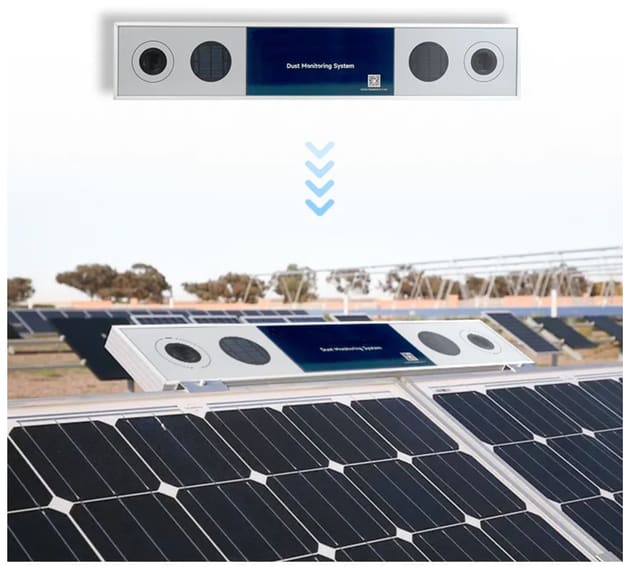
HenSistemasHS210-03
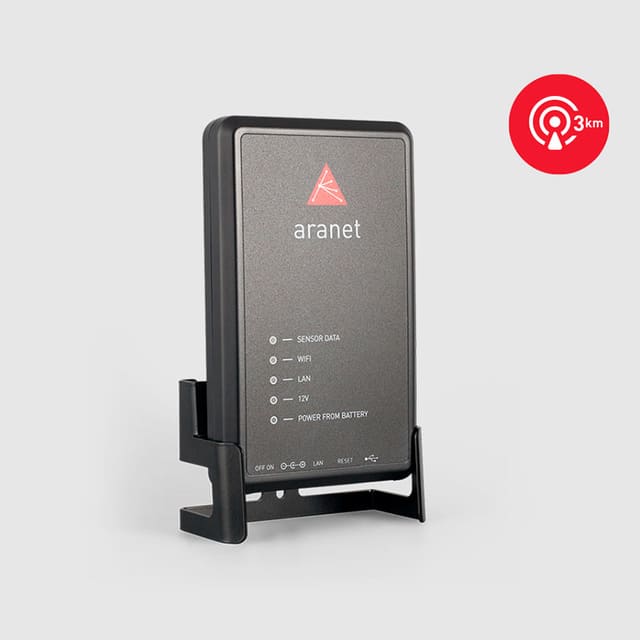
AranetTDSBWPA2
Tell HenSistemas about your application.