
WalzJUNIOR-PAM
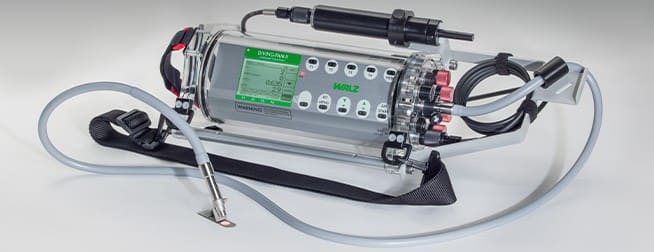
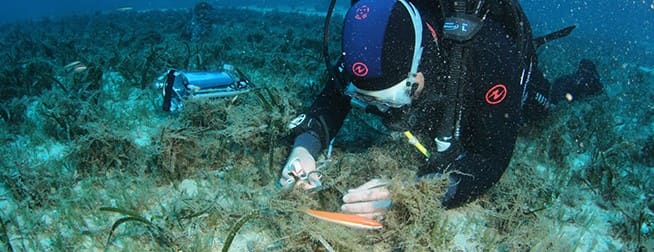
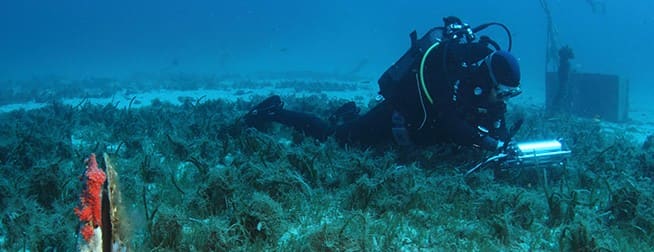

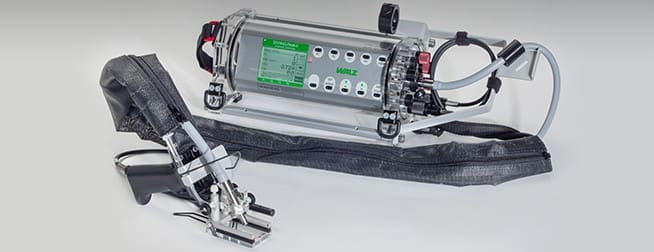
The DIVING-PAM-II succeeds the DIVING-PAM, a chlorophyll fluorometer that earned its reputation as reliable and robust for studying photosynthesis in and under water; some 500 scientific papers with DIVING-PAM measurements have been published so far.
The new model keeps the field-proven design of its predecessor while adding state-of-the-art optical and electronic components that take data acquisition and instrument control significantly further.
Price on request
No sign-up. You review the list and send it when you are ready.
Torn between two models?
Ask on WhatsAppSaves this product and the next ones you view in this browser, up to eight, for 30 days. You can disable it under “History” in the footer.
History is enabled in this browser. History
The DIVING-PAM-II lets you study photosynthesis down to 50 m water depth. The whole instrument is operated through 10 infrared reflection switches placed inside a transparent, cylinder-shaped housing. An energy-saving B/W transflective screen shows instrument status and measured data and stays readable even in sunlight. For long-term assessment of photosynthesis, the instrument can also be run from a computer over a special underwater cable.
The MINI-SPEC miniature spectrometer comes with the basic system and adds a new level of information: it measures PAR spectra, which vary significantly with water depth, and allows spectral analysis of the reflectance and fluorescence emission of a sample. A new internal PAR sensor continuously records the intensity of the internal light source.
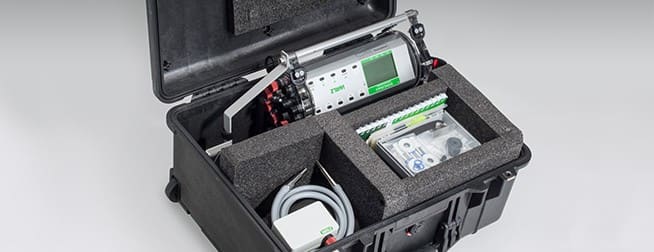
Supplied with 1.5 m flexible fiber optics, miniature spectrometer, distance clip, dark leaf clips, surface holder, PC Interface Box, battery charger, USB cable, 5 m underwater cable and WinControl-3 software, all in a rugged outdoor transport case. In dry environments, MINI-PAM-II fluorometer accessories can be used together with the DIVING-PAM-II.
The two versions differ in the color of the primary LED. The blue version (DIVING-PAM-II/B) has a blue LED peaking at about 475 nm; in the red version (DIVING-PAM-II/R) it is replaced by a red LED peaking at about 655 nm. Both carry a second, far-red LED that emits maximally above 700 nm for specific excitation of photosystem I.
The spectral window for fluorescence detection also differs: the blue version detects fluorescence at wavelengths > 630 nm, the red version at wavelengths > 700 nm.
No published specifications for this product.
WalzJUNIOR-PAM
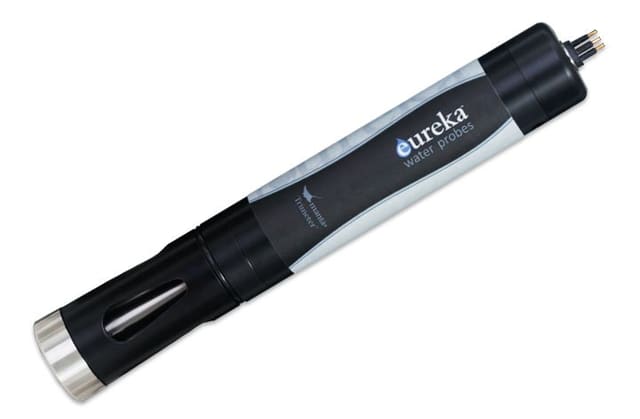
EUREKA water probesTrimeter
AquareadAP-PRO & AS-PRO
EUREKA water probesMANTA-PLUS
Tell HenSistemas about your application.